

Your designations, kept as data you can read. A member state’s officer opens the registry the way she opens any official record: which authority carries her country’s designations, with what scopes; which laboratories associate to it; what the utilizers may see. The difference is that the chain is data, not a filing cabinet: every certificate her regime relies on answers to it, and anyone, her inspectors included, can verify against it without an account and without a phone call.
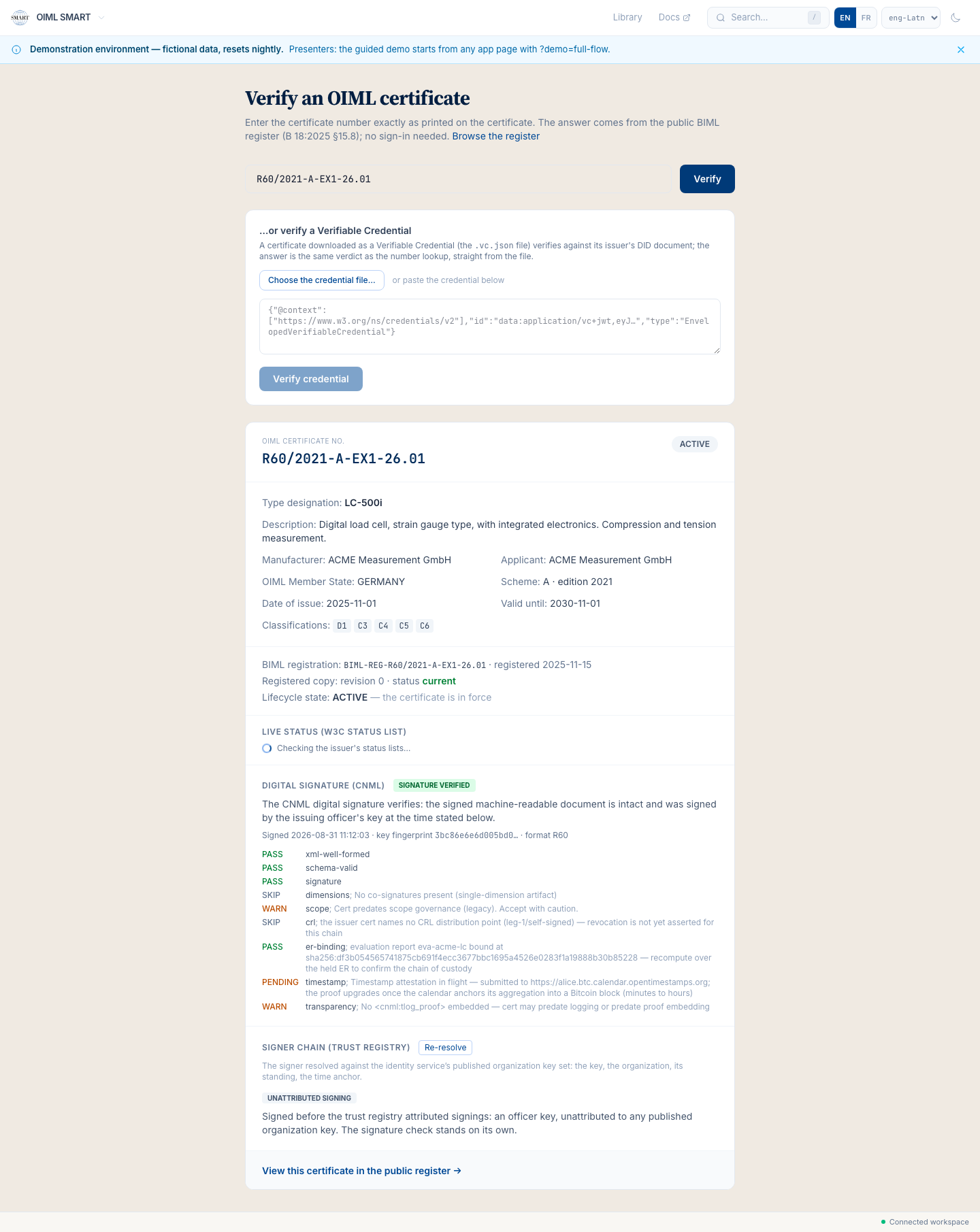
The public surface your regime's certificates live on: enter R60/2021-A-EX1-26.01 and read the verdict from the registered copy.
The story
The officer’s quarterly review, as the platform runs it. She starts at the participant registry: her country’s Issuing Authority entry, its scopes per Recommendation, the associated Test Laboratories, kept as registry data the scheme maintains, not as letters in a drawer. She follows the authority’s issued work where it actually lives: the public register, where every certificate the chain issues publishes as the validity reference. She checks one the way her market inspectors would: the number into the verify page, the verdict back from the registered copy, the live revocation and suspension lists consulted in the same answer. She onboards a new colleague through the identity service: accounts per organization, approved by her own administrator, the real member directory selectable. And the utilizers her country designates see exactly what their designation opens, the reports and certificates their access covers, honestly scoped, never broader.
What you can do today
Every act below was performed against the live services by the scripted capture apparatus before it was listed; each figure names its capture date and links the live surface. The registry surfaces sit behind the CS Admin persona, assumed through the identity service’s account chooser; the register, the verify page, and the join flow need no account.
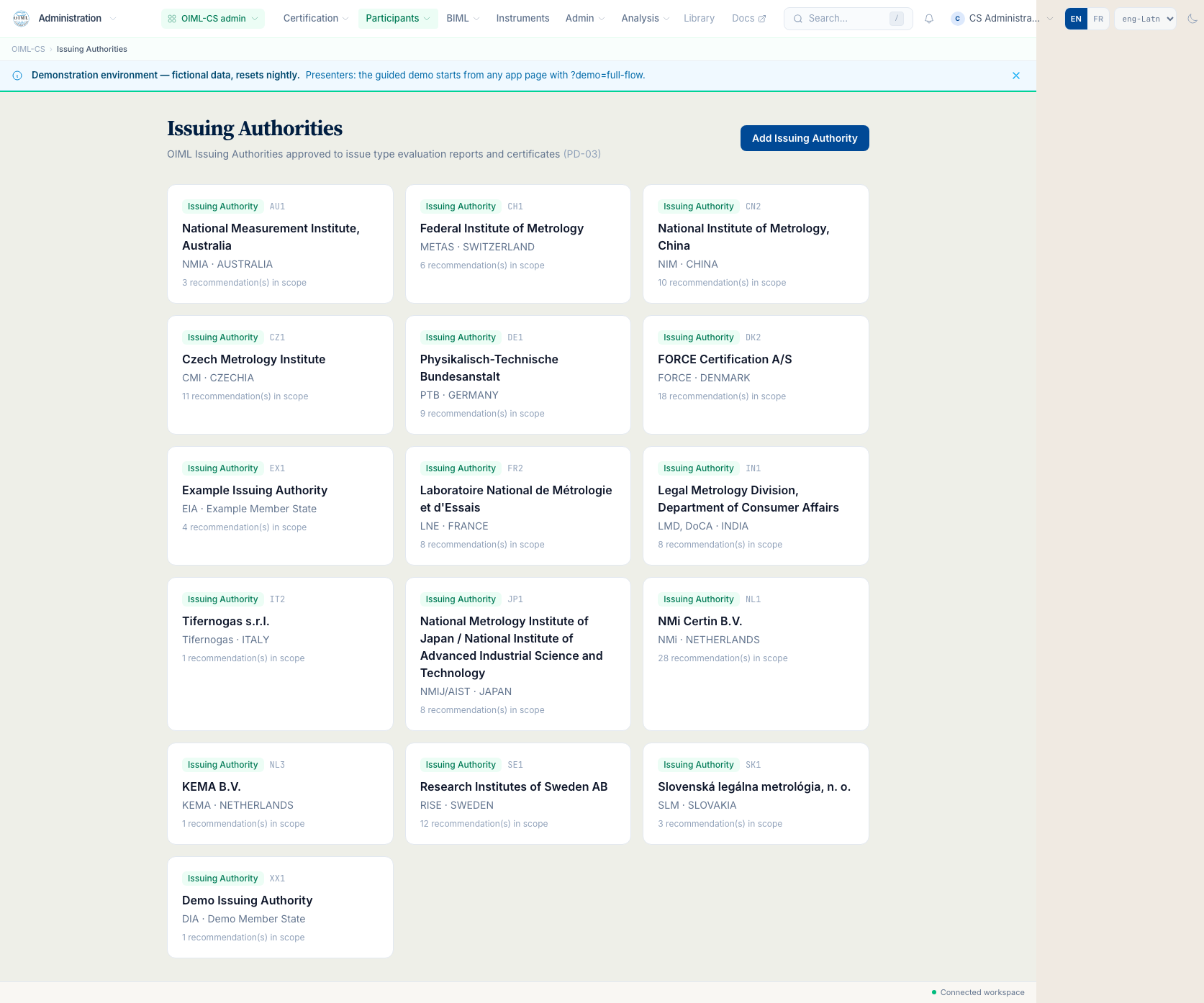
Read the designation chain as data. The Issuing Authority registry: the real register entries (PTB, METAS, NIM, and the rest) with their scopes, the chain your designations belong to.
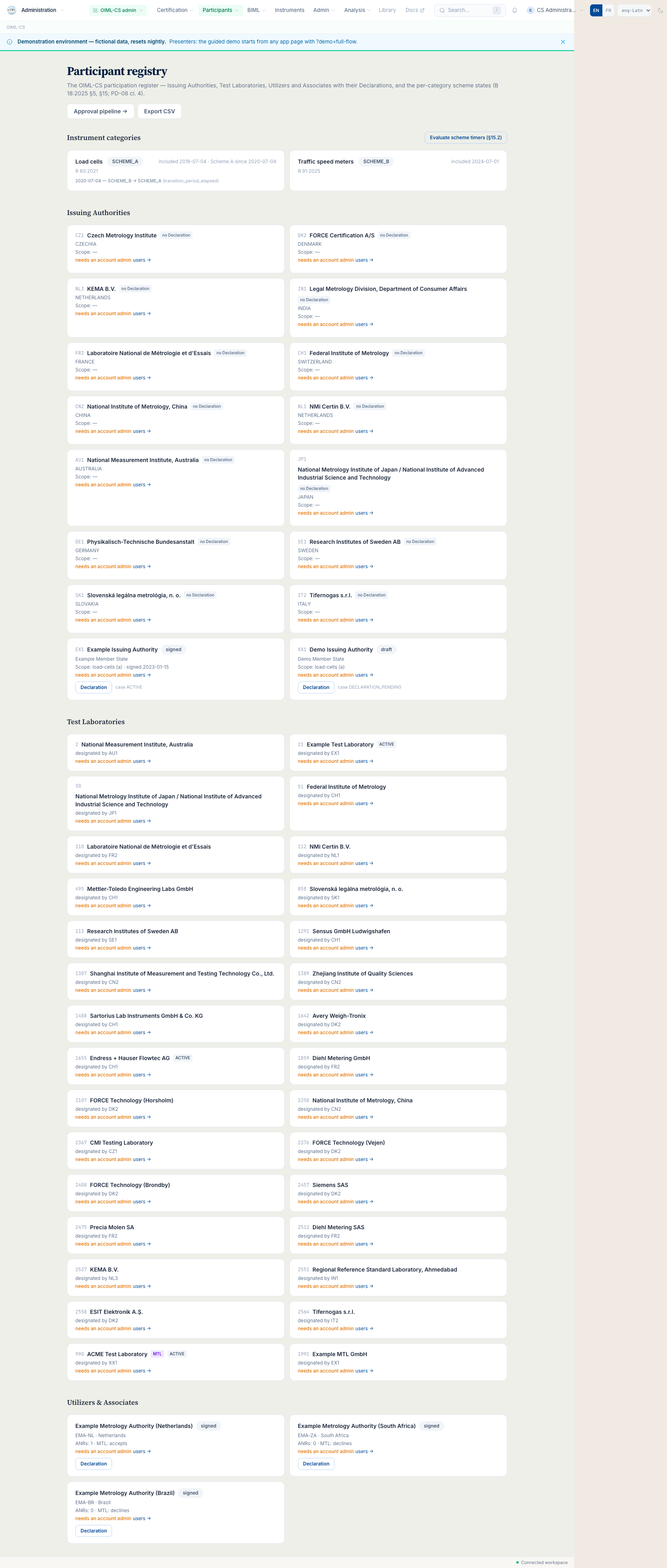
See the whole participant registry. The authorities, the laboratories, the utilizers and associates: the participant registry is the chain the register answers for.
Follow your authority’s issued work on the public register. The certificates the instance publishes, per scheme, browsable by anyone; the registered copy is what verification answers from. No account: the register.
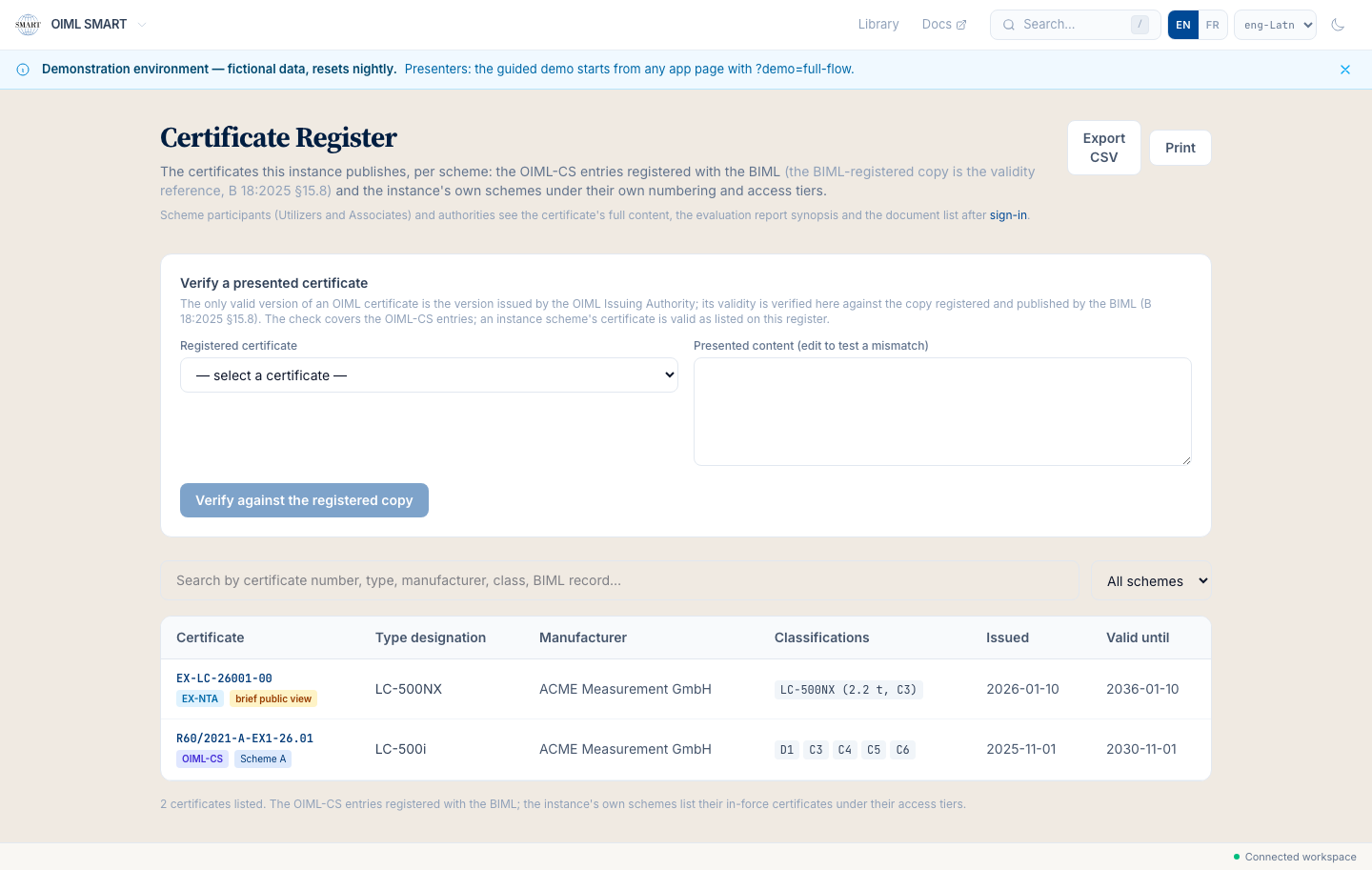
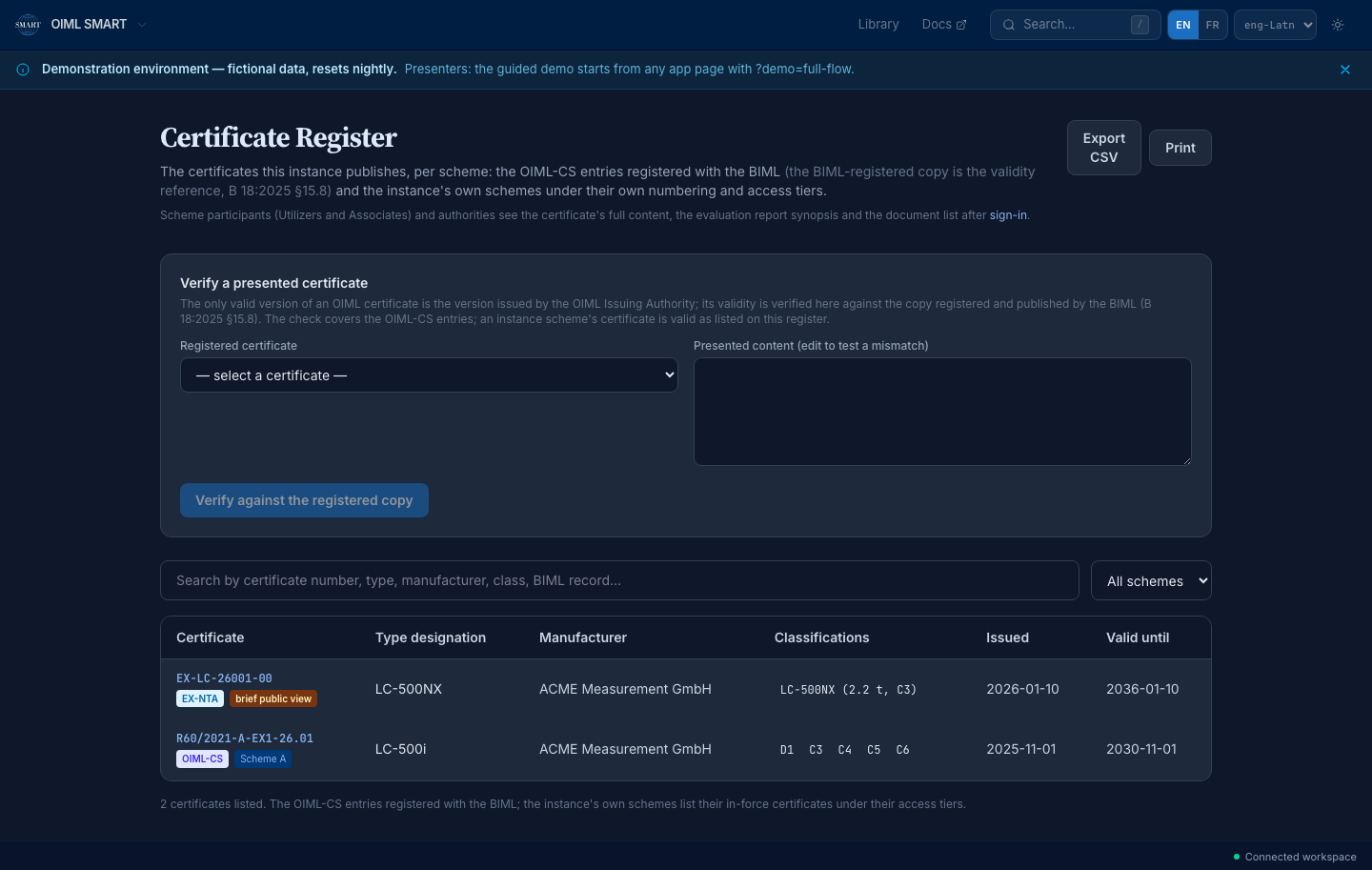
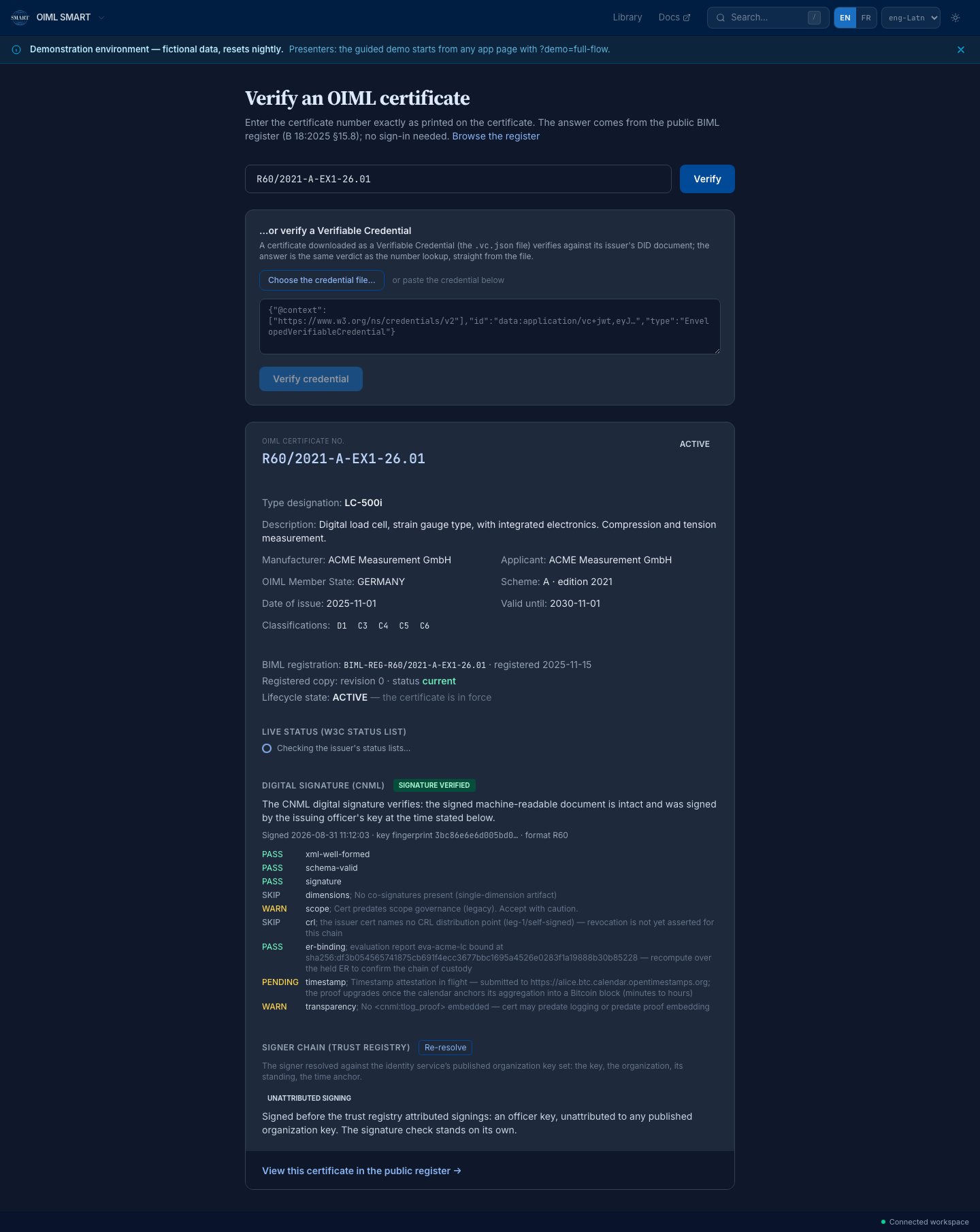
Verify the way your inspectors would. The number in, the verdict out: ACTIVE from the BIML-registered copy, the live status lists checked in the same answer. No account, no phone call to the authority: the verify page.
Give your personnel accounts under your organization. The identity service issues accounts per organization, approved by your own administrator; the join flow knows the real member directory.

How it works
What this changes, and what it does not
Today the chain lives in designations letters, scope annexes, and the register’s periodic publications; following it means asking, and verifying means phoning the authority that issued. On the platform the chain is data and the register answers continuously. What does not change: your legal responsibility, your designations, your custody. The member state proposes and designates exactly as before; the platform keeps the chain readable.
Today (SMART) and the vision (SMART+)
Today · SMART
- The registries as data, the public register, the account-free verification: live today. the register ↗
- Accounts per organization on the identity service, approved by your own administrator. the join flow ↗
- Self-host under the Member State entitlement, with streaming updates; custody never has to move. the postures ↗
The vision · SMART+
The honest questions
Does our data leave our custody?
No. The self-host entitlement attaches to your category exactly so custody never has to move: your own instance, your data residency, the streaming update channel. The hosted official platform exists for the members who choose it; the architecture never requires it. The deployment matrix renders the postures plain.
Does the platform decide anything legally ours?
No. Designation, acceptance, issuance, withdrawal stay exactly where your law puts them; the platform computes verdicts and records who decided what. The liability surface is your existing one, with better evidence.
What does adopting this commit us to?
Reading costs nothing (the public surfaces are public), participating costs accounts (issued per organization, approved by your own administrator), and self-hosting is one service-class deployment with the rolling update channel. Nothing is retired until your regime is satisfied; the text of every Recommendation stays.
Our market relies on certificates from other member states. What changes for them?
The verify page answers from the registered copy regardless of which authority issued, by number or by file, and the certificate downloads as CNML, as a Verifiable Credential, and as an AAS submodel. The interop positions are public and boring on purpose.
Where to go next
No account: browse the register, then enter R60/2021-A-EX1-26.01 on the verify page and read the verdict your inspectors would get.
The full entitlement picture for your category, quoted from the program's single source.
info@oimlsmart.org: your member organization's onboarding starts with a conversation about which Recommendation first.