

Your regulations cite the Recommendations; now your systems can read them. OIML SMART turns the Recommendations into machine-actionable models with clause-level provenance, so compliance becomes something checkable, and the certificate register becomes something that answers. Your state keeps custody: the platform self-hosts under the Member State entitlement, and the text of every Recommendation stays.
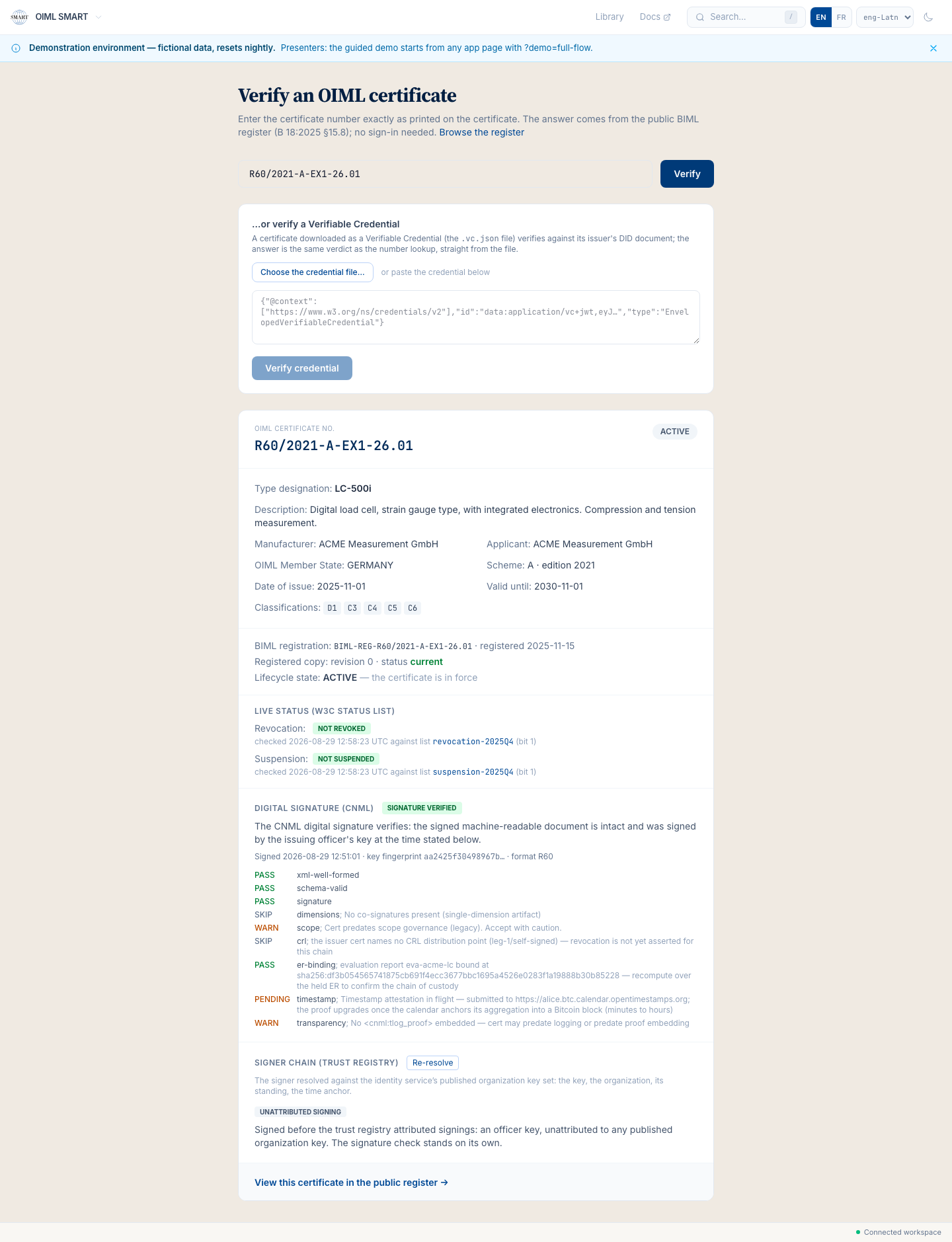
The public surface your regime's certificates would live on: enter R60/2021-A-EX1-26.01 and read the verdict.
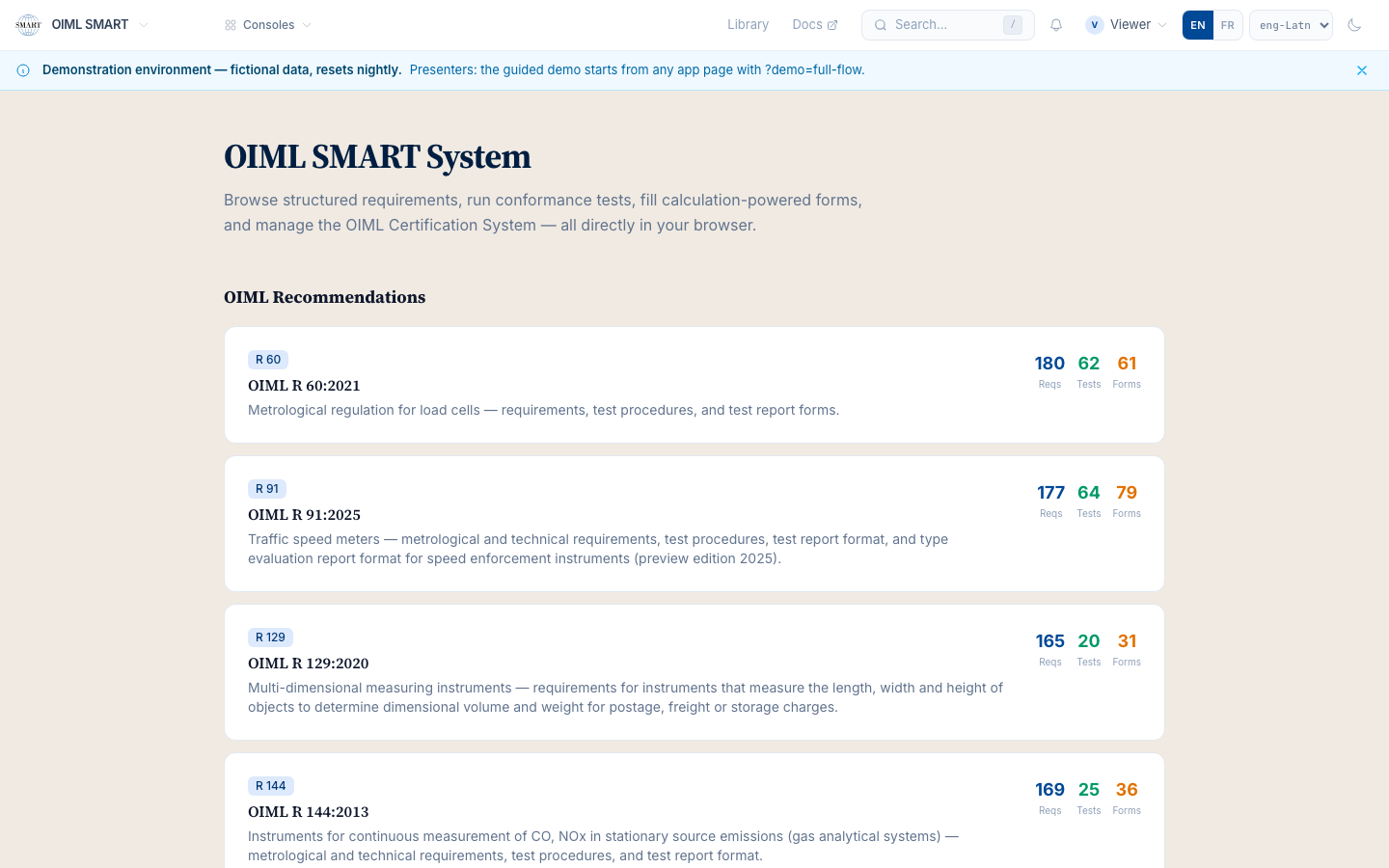
What you can do
Every act below was performed against the live services by the scripted capture apparatus before it was listed; each figure names its capture date and links the live surface. An act that cannot be performed does not list.
Verify any certificate your regime relies on, in seconds. The public verification reads the BIML-registered copy (B 18:2025 §14.8) and the live revocation and suspension lists; no account, no phone call to the issuing authority.
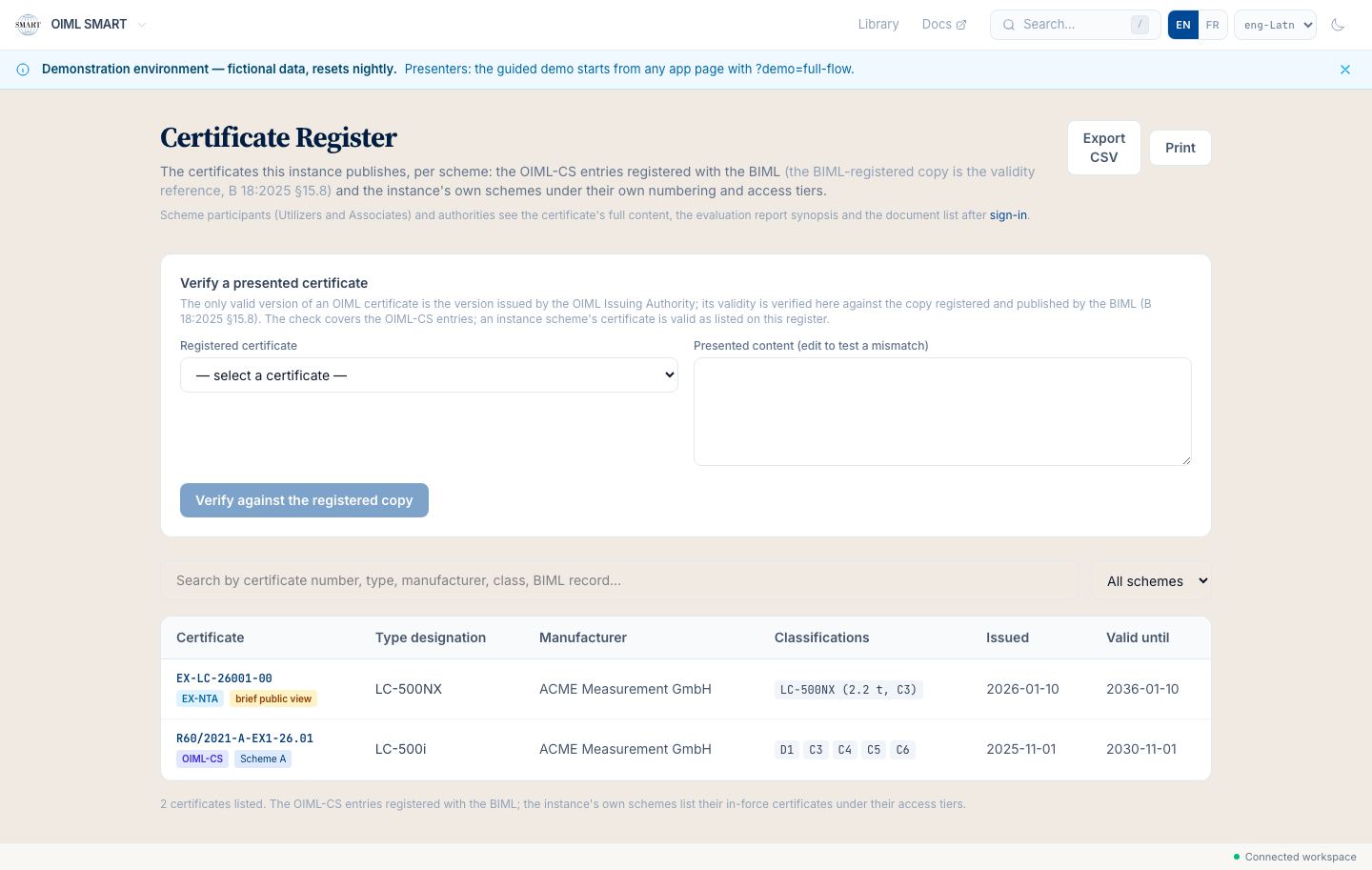
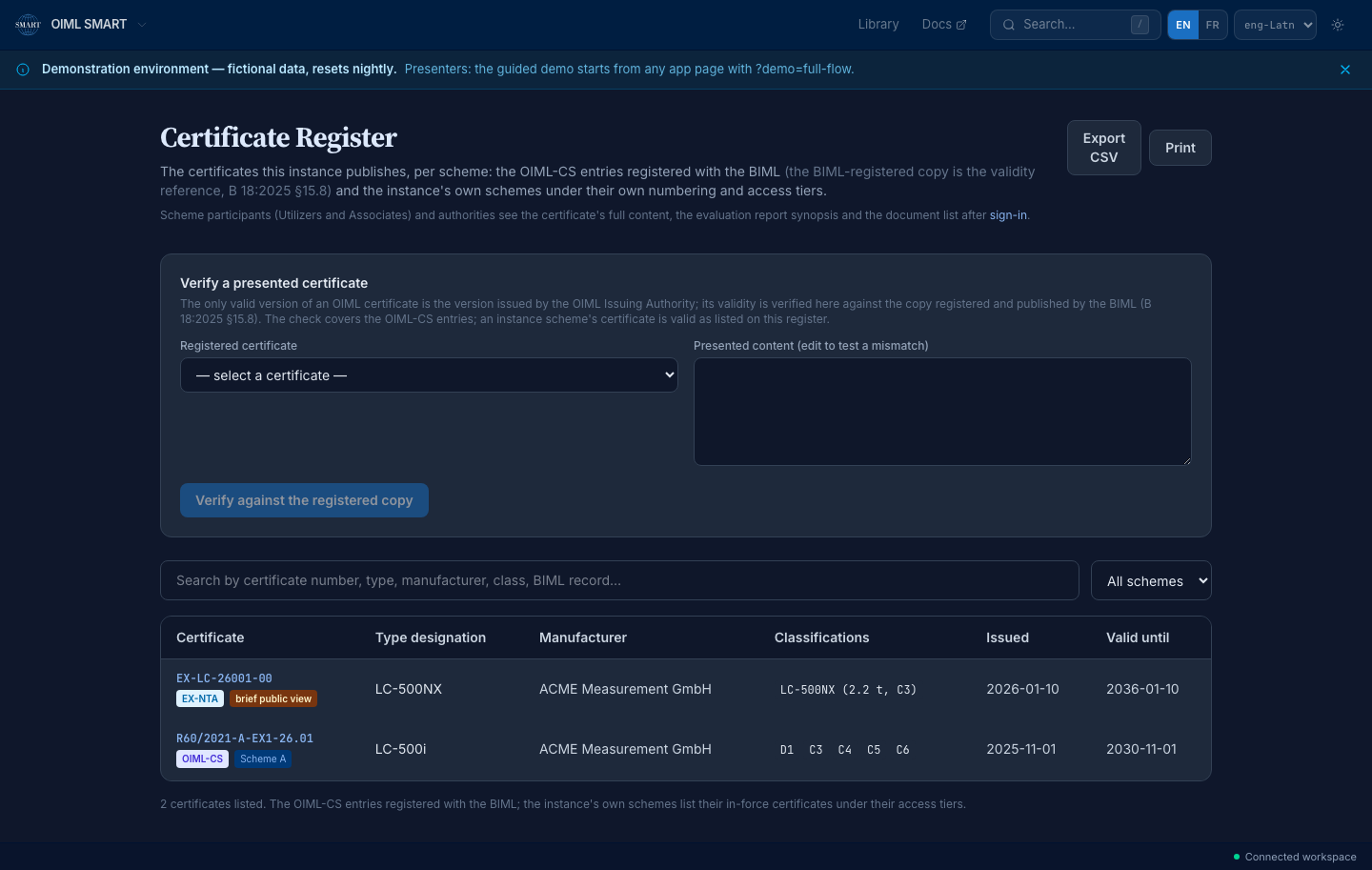
Read the register as the validity reference. The certificates the instance publishes, per scheme, browsable and exportable; the registered copy is what verification answers from.
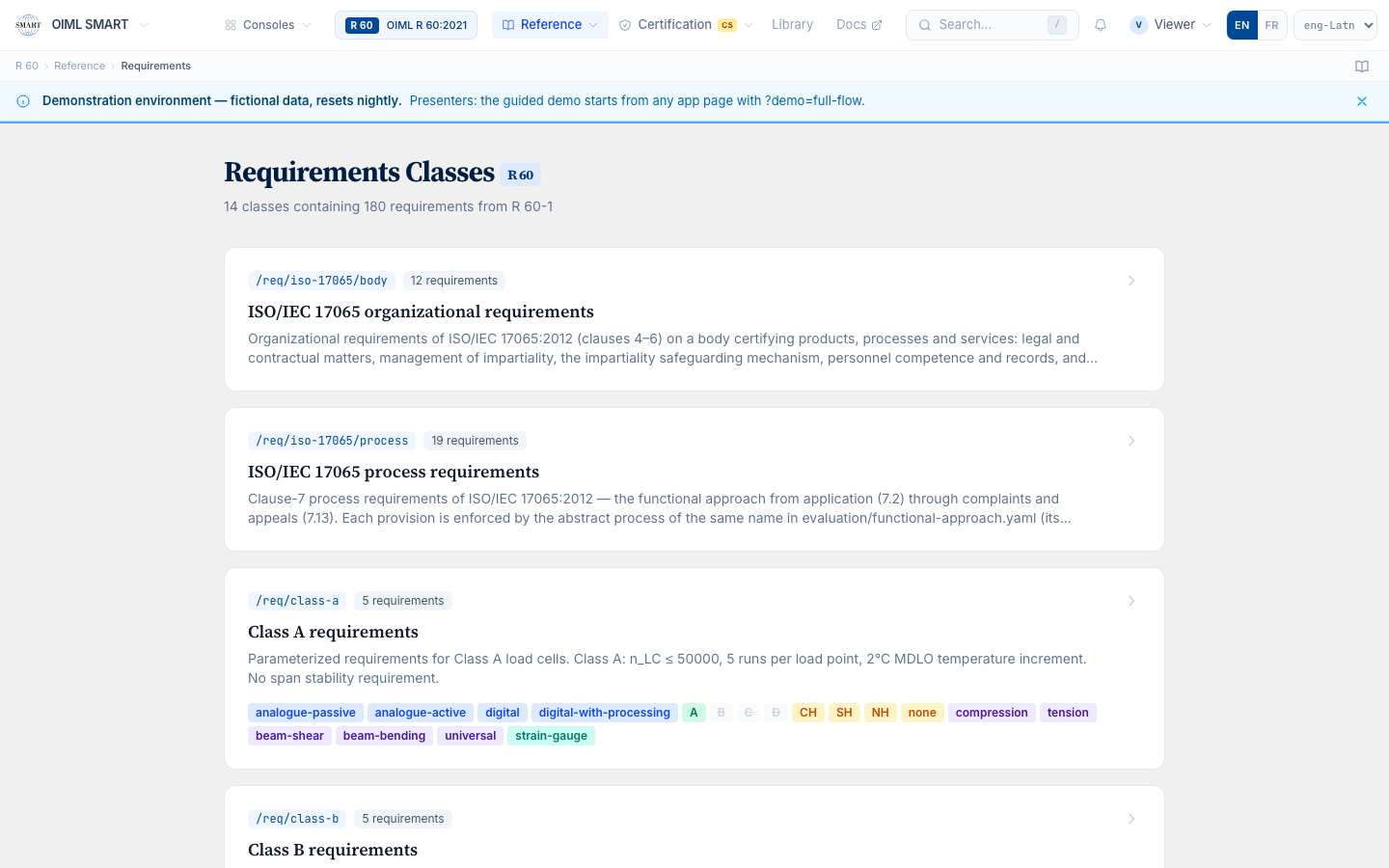
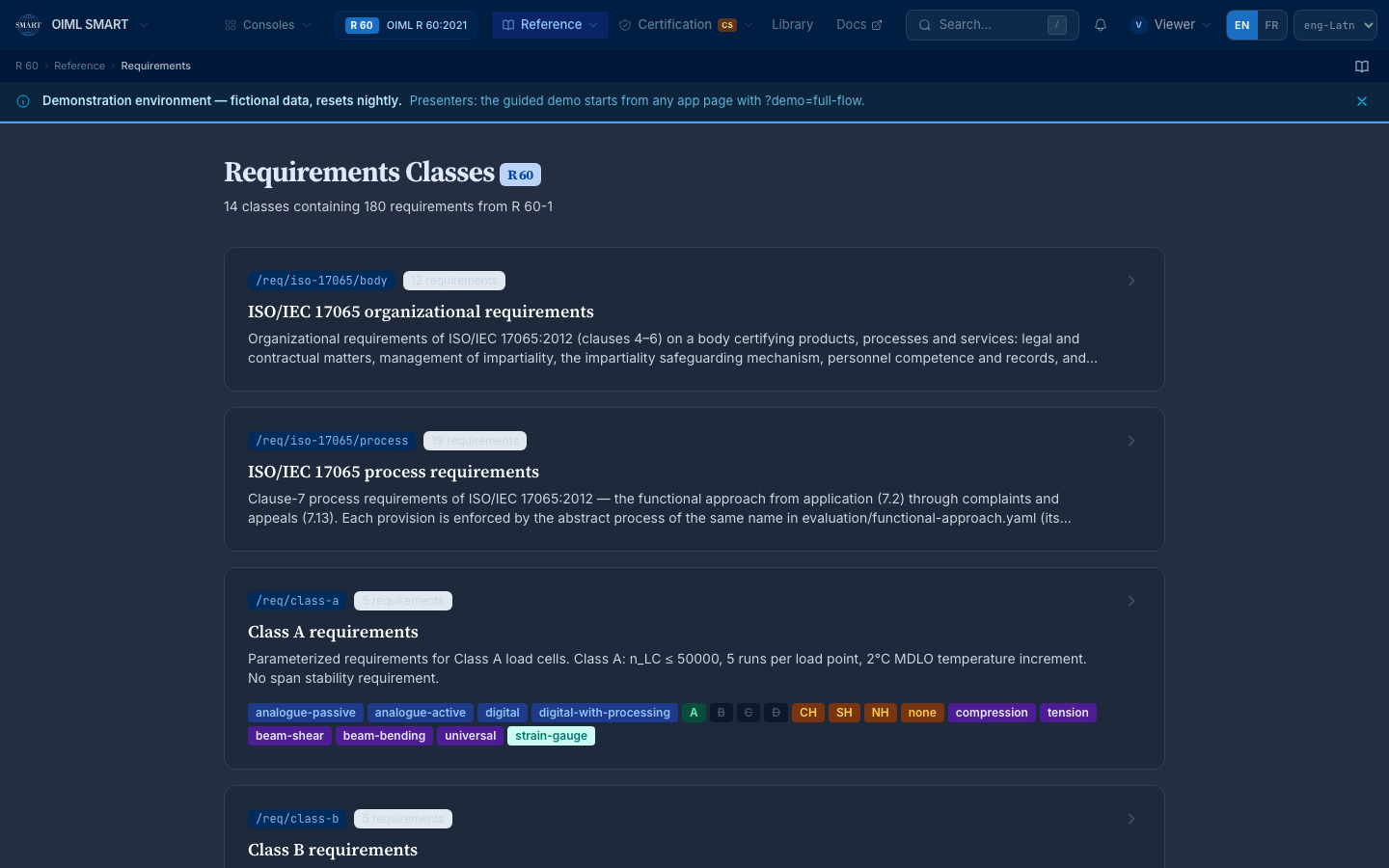
Read the Recommendations your regulation cites as models. R 60’s 180 requirements in 14 classes, 62 test procedures, the report forms: the structure your assessors navigate, with clause-level provenance back to the document your regulation names.
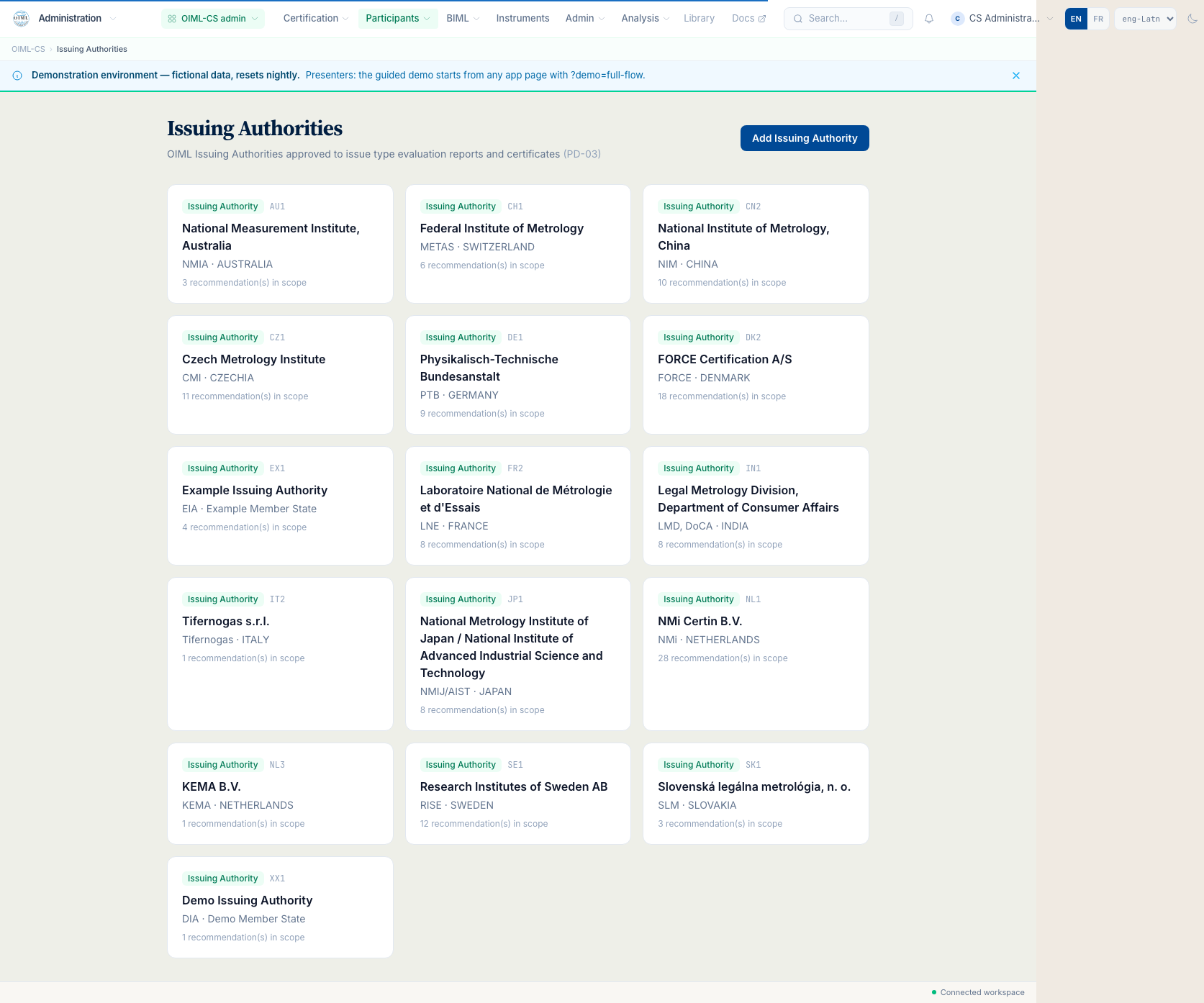
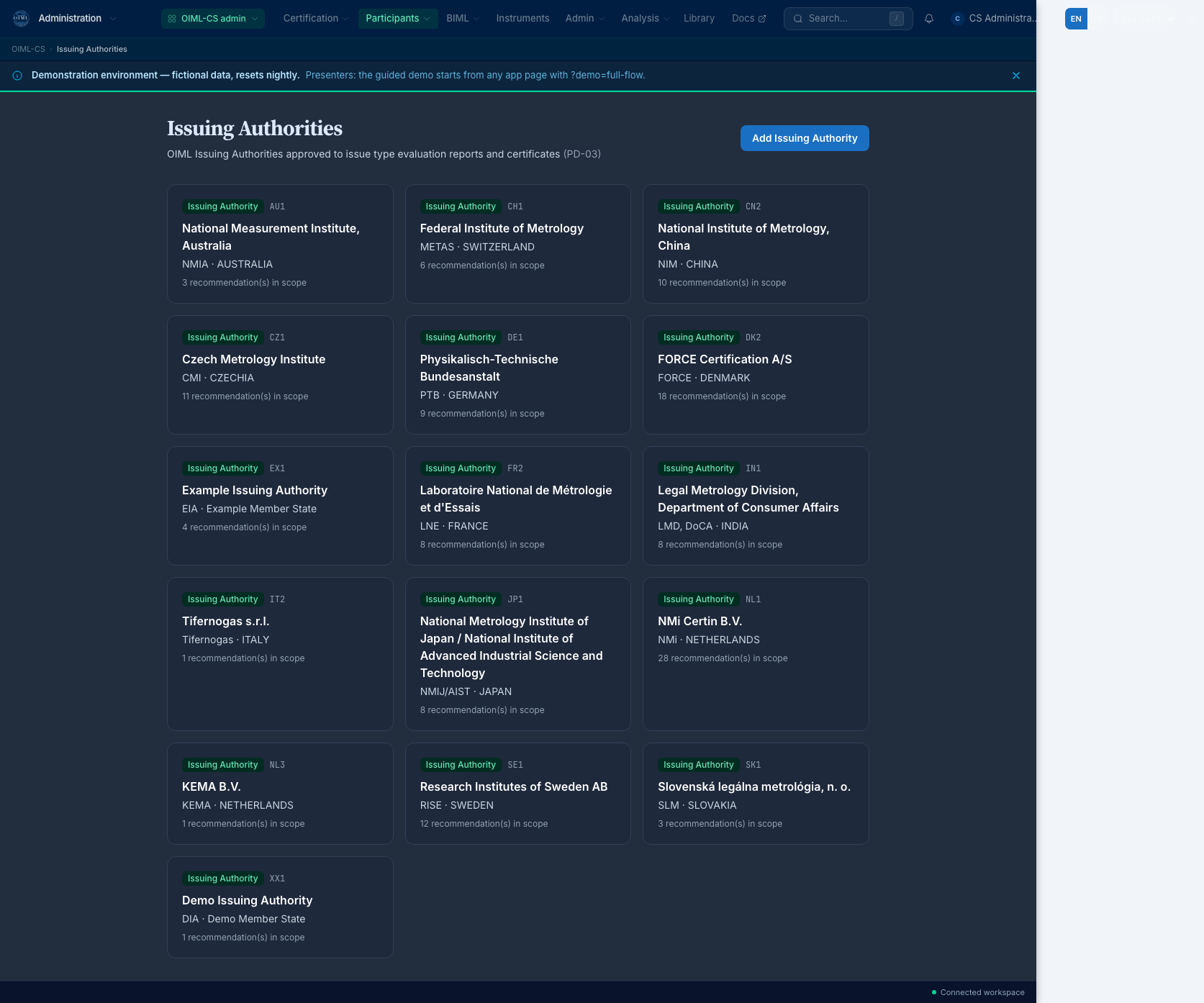
See the OIML-CS participant registry as data. The Issuing Authorities with their scopes, the registry chain your designations belong to: PTB, METAS, NIM, and the rest of the real register, not a mock-up.
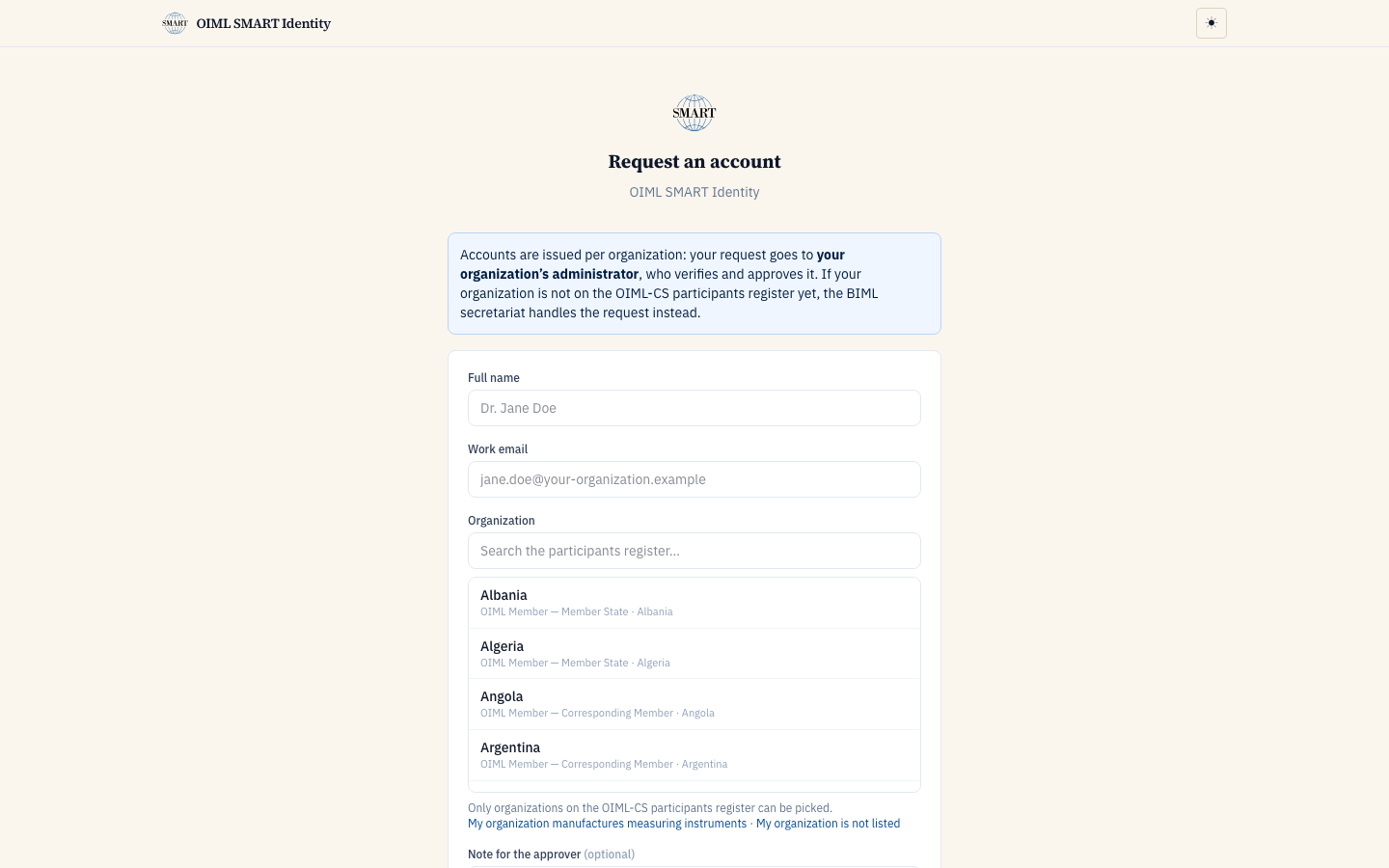
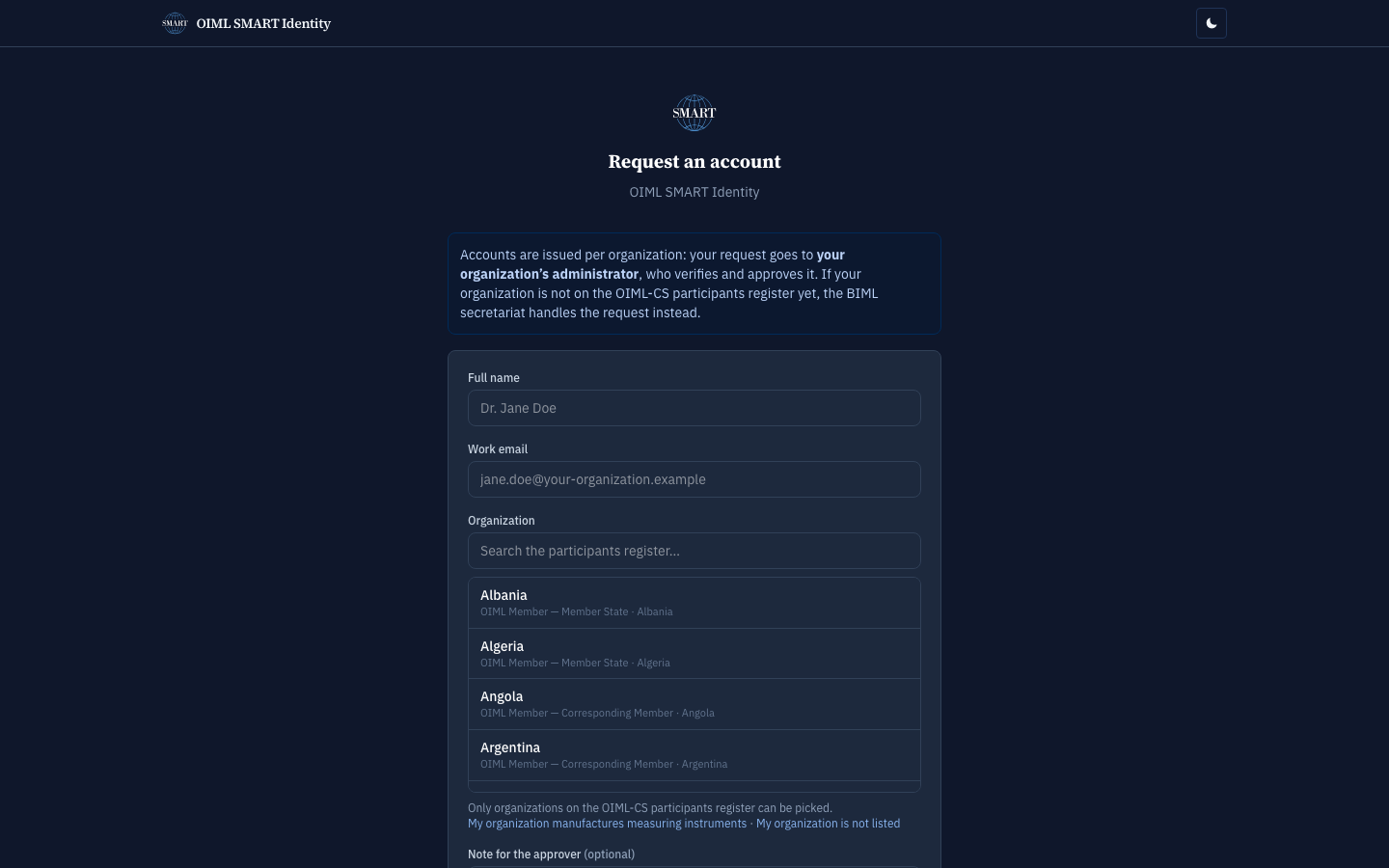
Give your personnel accounts under your organization. The identity service issues accounts per organization, approved by your own administrator; the join flow knows the real member directory.
Ask the OIML corpus, with citations. The AI service answers your metrologists’ questions from the OIML publications at the member tier, every claim carrying a clause-level citation.
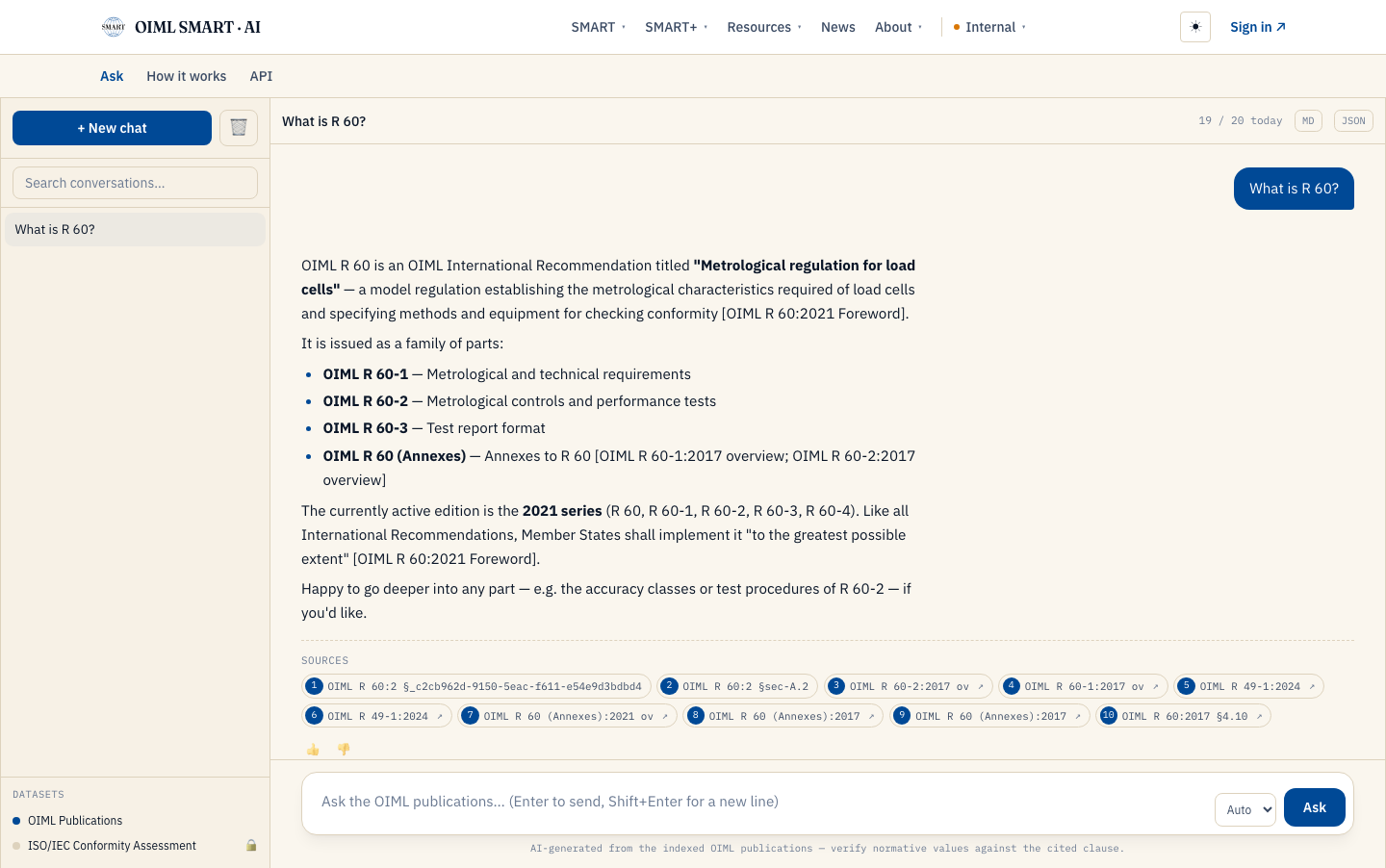
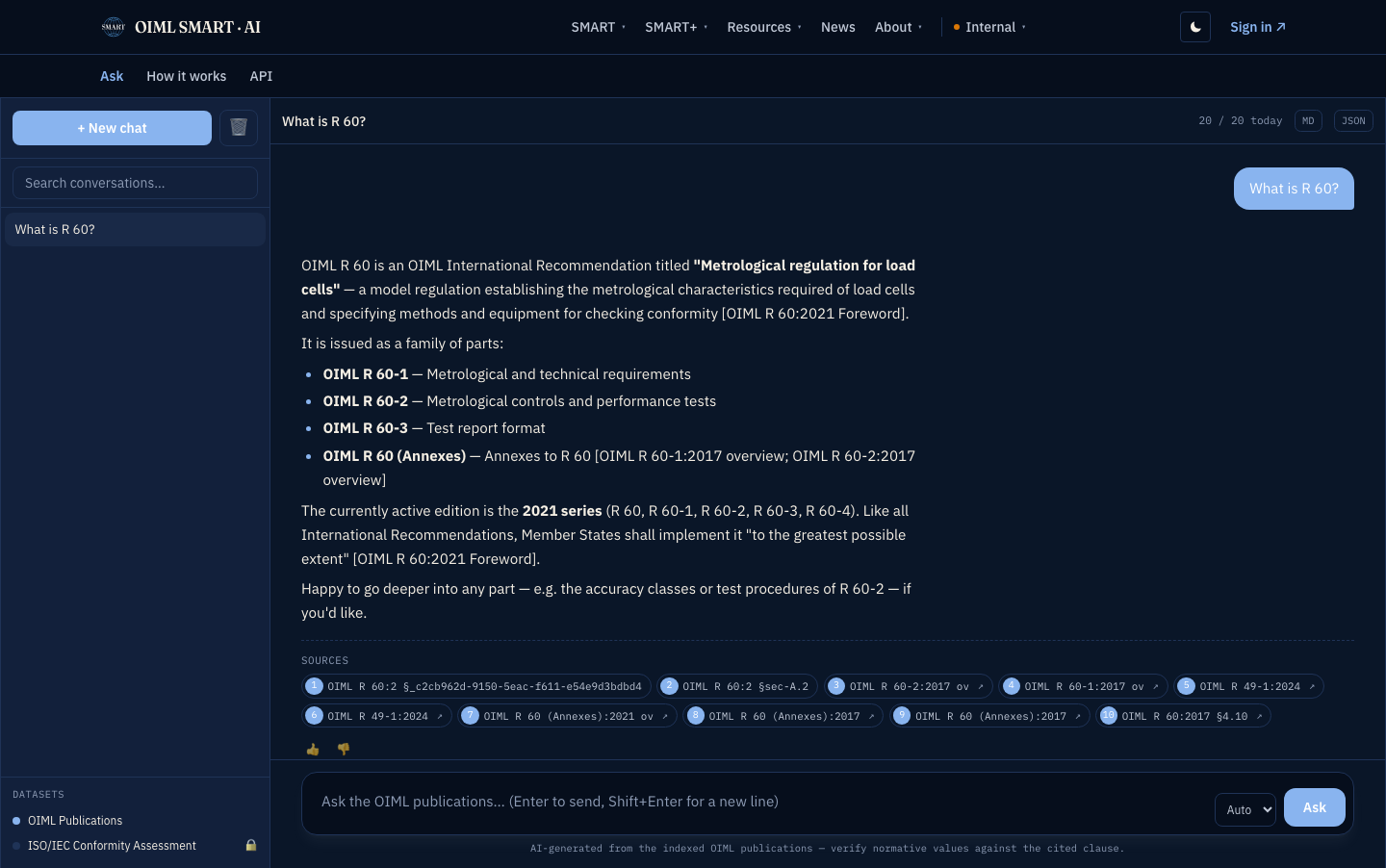
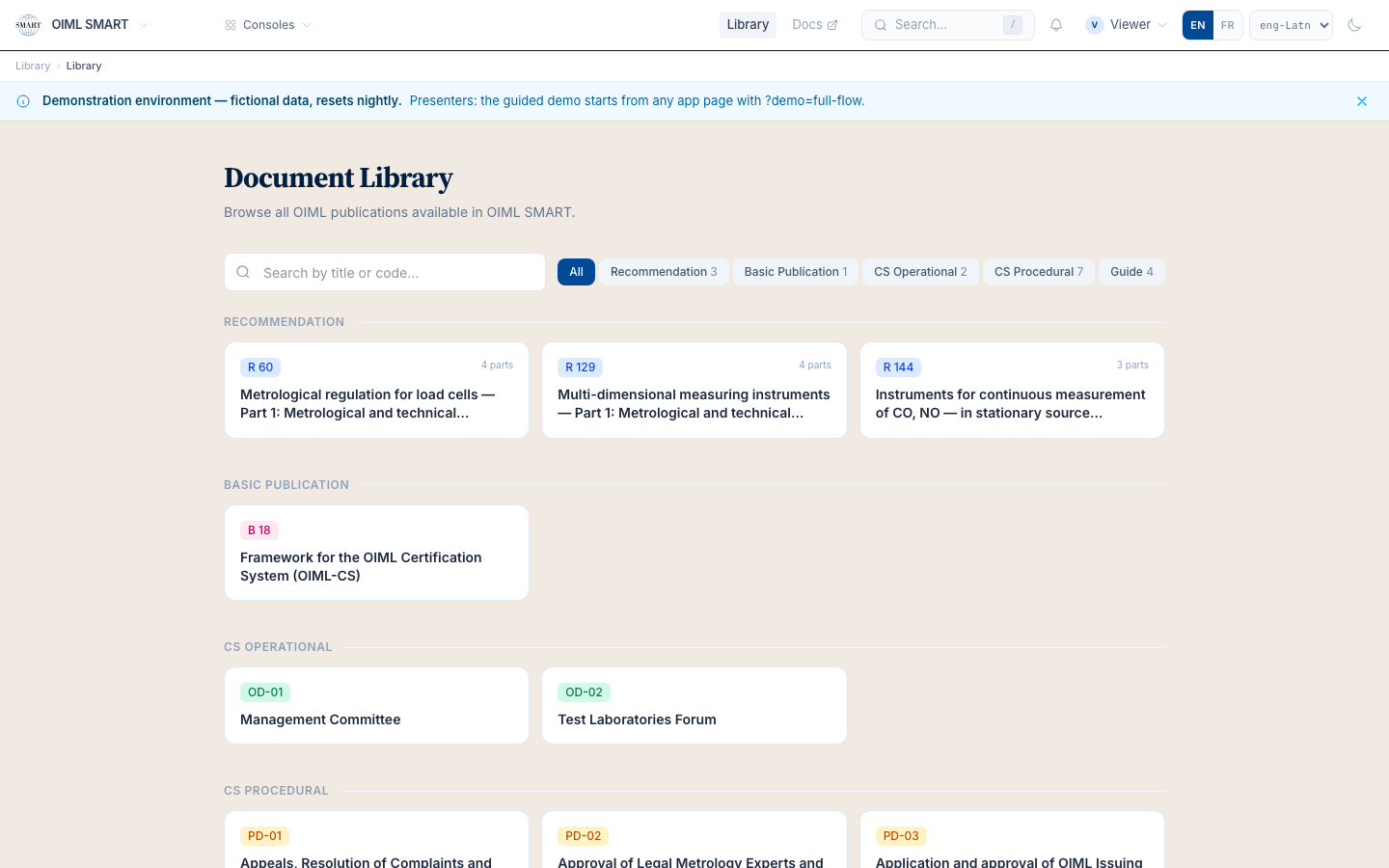
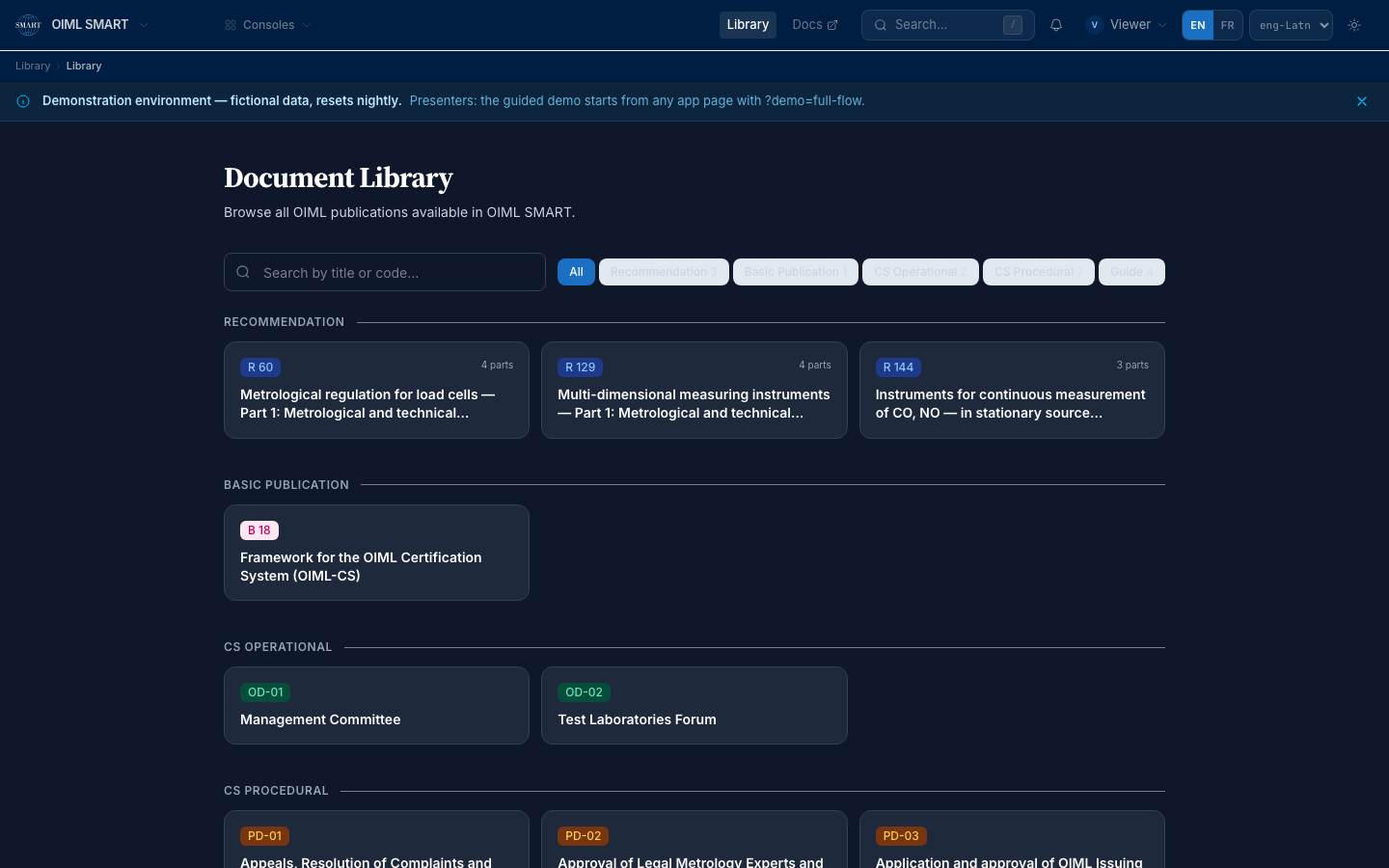
Read the whole corpus in the library. The Recommendations, B 18, the procedural and operational documents: the scheme’s document chain, one place.
How it works
What this changes, and what it does not
Today your national type-approval regime references OIML Recommendations as PDF documents; every assessment is manual, every test report arrives unstructured, and market surveillance samples instruments and hopes the sample tells the truth. On the platform the Recommendation is executable content and the register answers. What does not change: your legal responsibility, your designations, your custody. The text stays; the model joins it.
Today (SMART) and the vision (SMART+)
Today · SMART
- The certification workflow, the registries, the models: the platform itself, live. the demo ↗
- Public verification and the certificate register, no account, no phone call. verify ↗
- The AI service at the member tier, answering the OIML corpus with citations. ask ↗
- Self-host under your entitlement, with streaming updates; the matrix quotes it. the matrix ↗
The vision · SMART+
- Monitorable compliance between assessments: instruments serving their governed aspects through SMART twins. roadmap ↗
- Market surveillance reading live verdicts instead of sampling blindly (the continuous-compliance engine). roadmap ↗
- The SMI Simulation to rehearse a Recommendation’s behavior before your regime adopts it. roadmap ↗
- Dataspace federation with your national systems, the roadmap legs named there. roadmap ↗
What you can use, and what you can run
The Member State category carries the program’s full entitlement: every hosted service, the self-host right for the platform software with streaming updates, and the trust-registry registration. Quoted from the program’s single entitlement source:
| Service | Member State |
|---|---|
| OIML SMART account (the identity service) | ✅ |
| Identity service software | ✅ 🏠 🔄 |
| OIML-CS SMART Platform (cloud) | ✅ |
| SMART Platform software (self-host) | 🏠 🔄 |
| The demo instance | ✅ |
| The Studio viewer | ✅ |
| The Vocabulary | ✅ |
| The status service | ✅ |
| Ommisa, the AI service | ✅ member tier |
| SMART Recommendations content | ✅ |
| The trust registry (organization keys) | ✅ registers |
| The SMI Simulation | ✅ 🏠proposed |
| The SMART Twin (SMART+) | roadmap |
- Use — hosted, on the official services
- Self-host — on-prem/cloud, under the category’s own entitlement
- Streaming updates — the rolling channel the deployment runbook names
- The upsell note — see the narratives below the matrix
Quoted from the program's single entitlement source; the full matrix, all member categories by all services, lives atWho can run what.
The honest questions
Sovereignty: does our data leave our custody?
No. The self-host entitlement attaches to your category exactly so custody never has to move: your own instance, your data residency, the streaming update channel. The hosted official platform exists for the members who choose it; the architecture never requires it.
Liability: does the platform decide anything legally ours?
No. The platform computes verdicts from the Recommendation’s model and records who decided what; the legal acts (designation, acceptance, issuance, withdrawal) remain exactly where your law puts them. The liability surface is your existing one, with better evidence.
Cost: what does adopting this actually commit us to?
The minimal honest answer: reading costs nothing (the public surfaces are public), participating costs accounts (the identity service issues them per organization), and self-hosting is one service-class deployment with the rolling update channel. The adoption program is tiered: read the position pack, reproduce a type evaluation against the simulator, then trial one Recommendation with one laboratory. Nothing is retired until your regime is satisfied.
Interop: is this a walled garden?
The positions are public and boring on purpose: ISO/IEC SMART, ReqIF, RDF/SHACL, W3C Verifiable Credentials, DPP, AAS, OpenCDD, DSP/ODRL. The certificate downloads as CNML, as a VC, and as an AAS submodel today; the dataspace and interop page names the planes and the export doctrine.
Gradualness: what happens to our PDFs and our existing register?
Nothing dies. The text of every Recommendation stays; certificates keep their paper meaning; records mode lets offline work enter the record honestly marked. The model joins the text; it does not replace it.
Where to go next
A full platform deployment running the fictional load-cell pilot. The cast signs in through the identity service, each seat assumed as a persona; the instance resets nightly.
The position pack for national metrology institutes: the concepts your metrologists use, formalized.
info@oimlsmart.org: your member organization's onboarding starts with a conversation about which Recommendation first.