

The Studio viewer
A SMART Recommendation is a model, and the Studio is where you read it as one: the requirement tree, the code, the mappings, the diff between editions, all validated, all in the browser. It is read-only and public; authoring is the editor program on the roadmap.
Public, no account. The model tree of the published R 60 opens first; the lens bar takes it from there.
What you can do
Seven acts, each performed against the live viewer before this page listed it; the dated capture is the audit artifact, re-produced by scripts/capture-services.ts on every refresh.
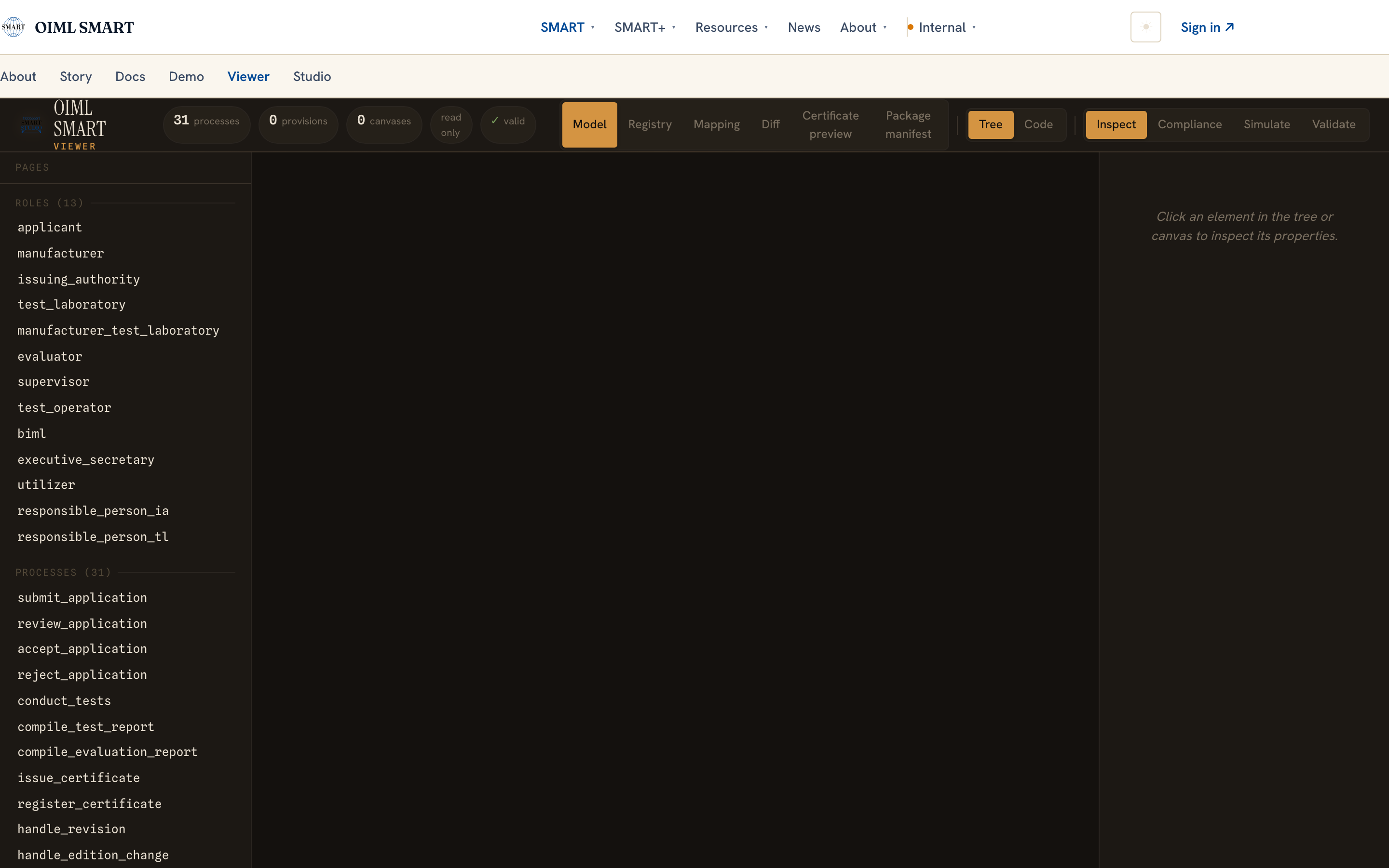
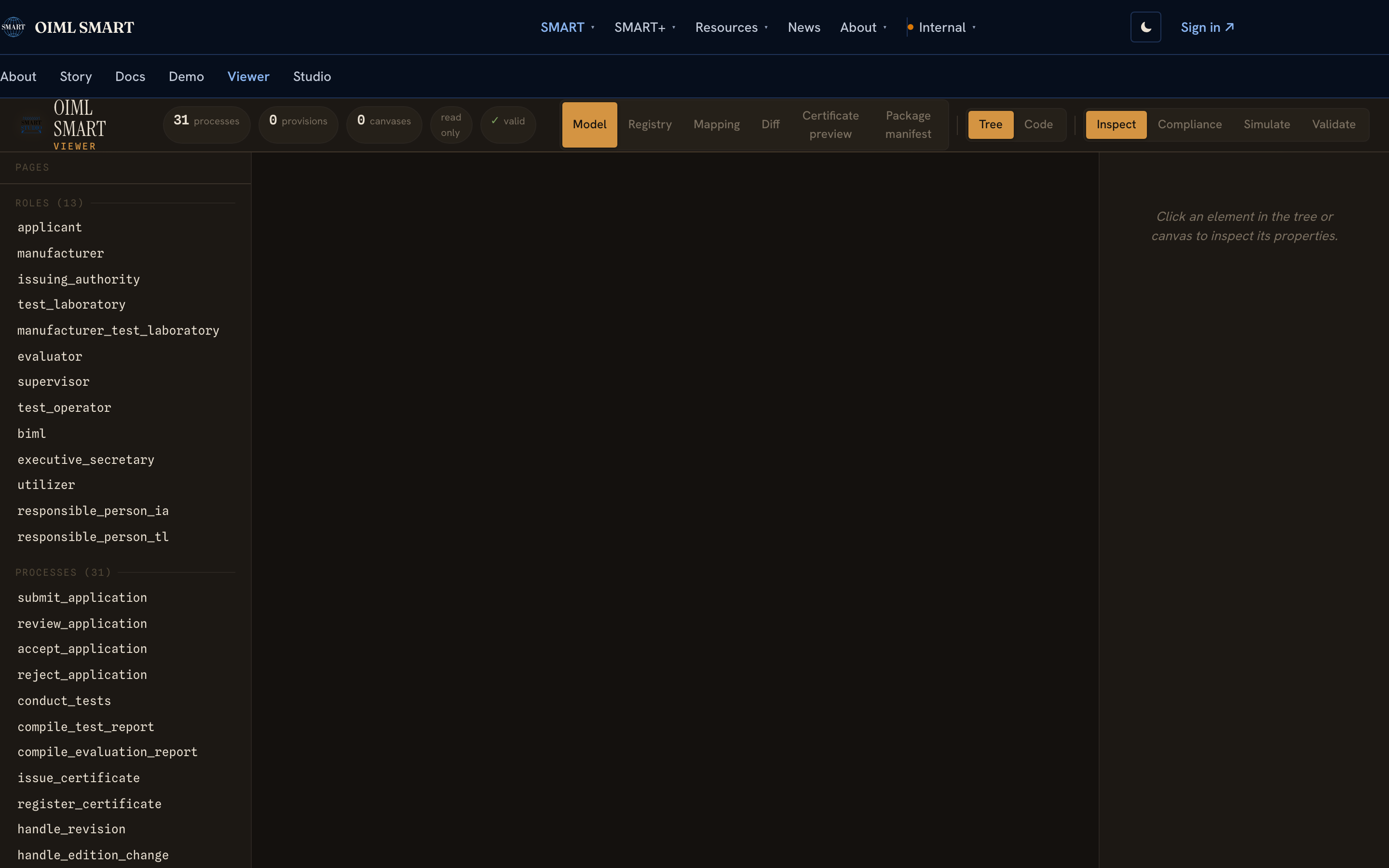
1. Read a Recommendation as a model tree. The published OIML R 60 opens as structure: 13 roles, 31 processes, the requirements and forms beneath them. This is the document a committee negotiates, rendered as the artifact the platform executes.
The tree view: the Recommendation as structure — captured 2026-08-29 by scripts/capture-services.ts 2. Read the same model as source. The code view shows the Primmel package the tree renders from: the package id, the kind, the editions, the base URN, the modules it composes. The model is the source, not a copy of it.
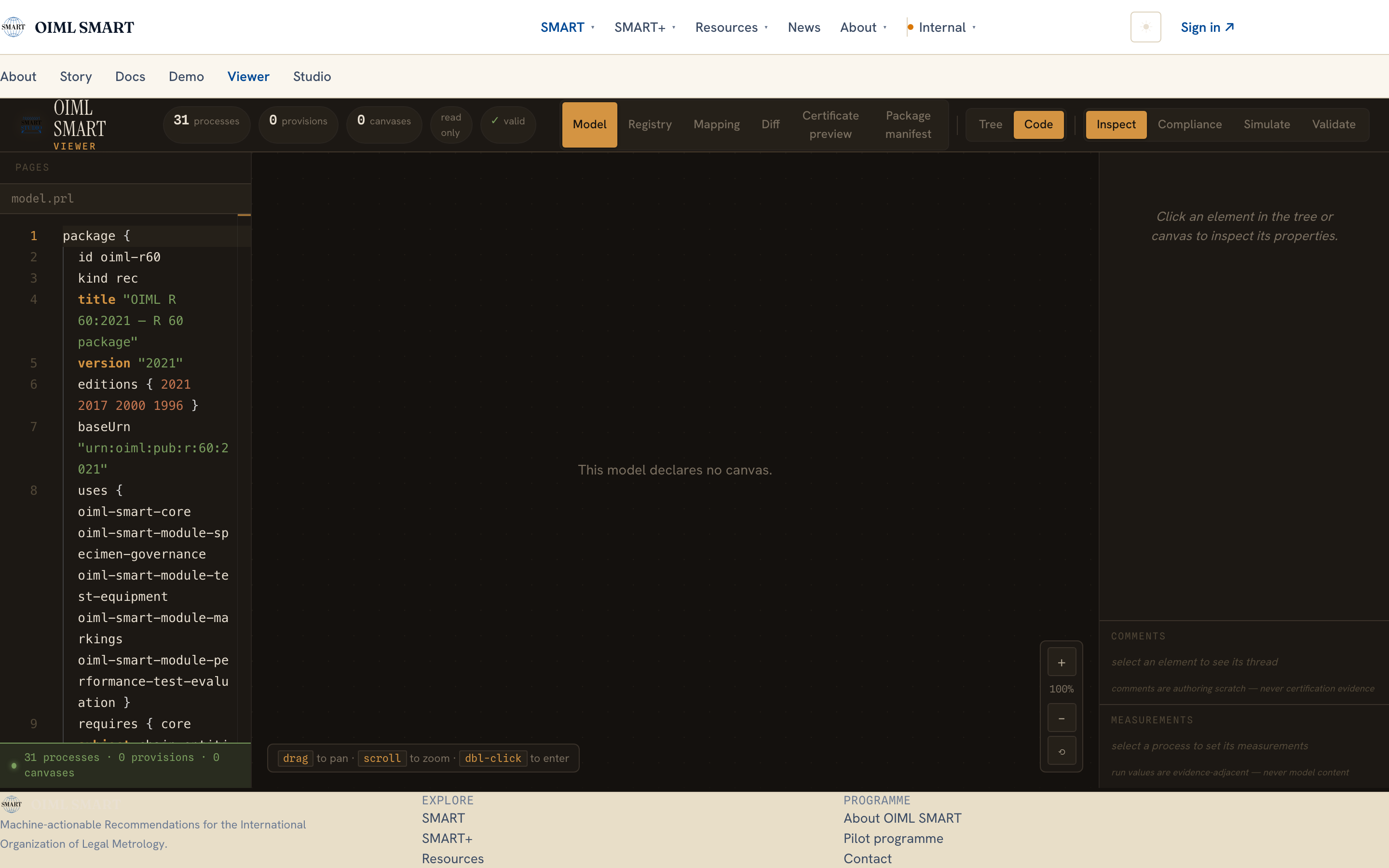
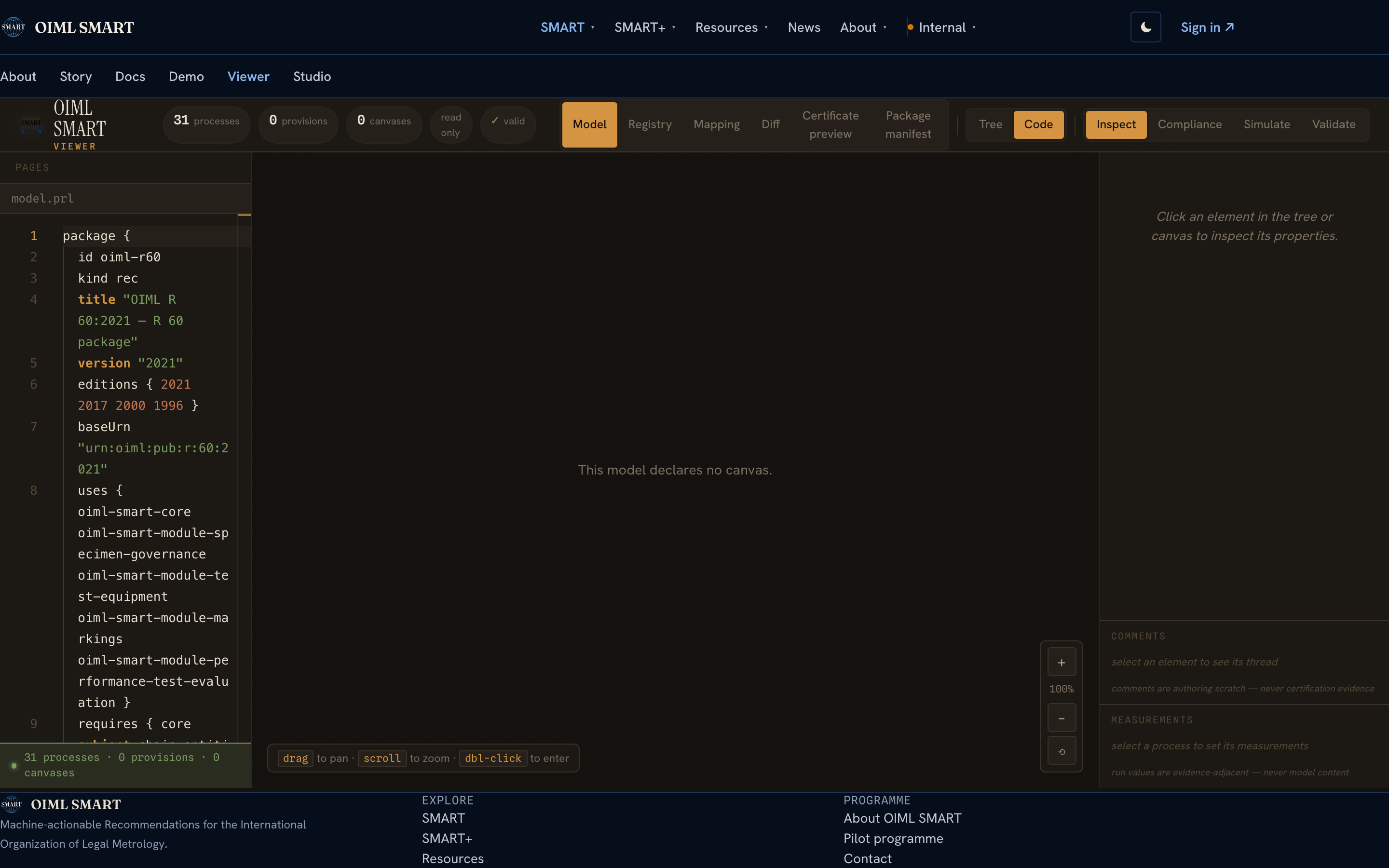
The code view: model.prl, the package itself — captured 2026-08-29 by scripts/capture-services.ts 3. Trust the markers, because they are computed. The read only badge and the valid marker are the viewer's own computed state, not decoration: the viewer validates what it shows and says so, and it says read only because that is what it is.
4. Check the mapping lens. The mapping lens aligns editions and related documents where the model declares a mapping profile, and it is honest when the model does not: the current package declares none, and the lens says exactly that.
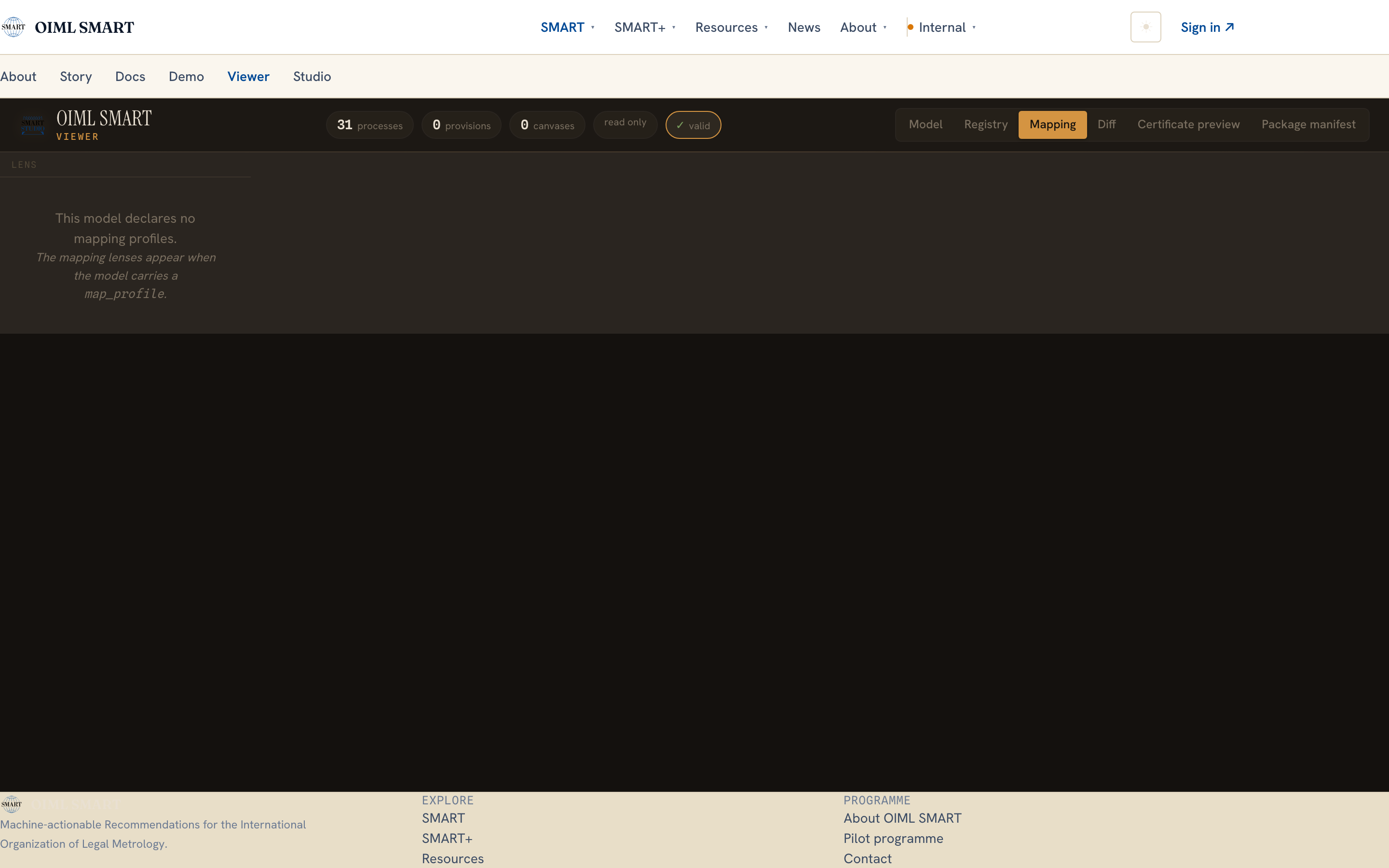
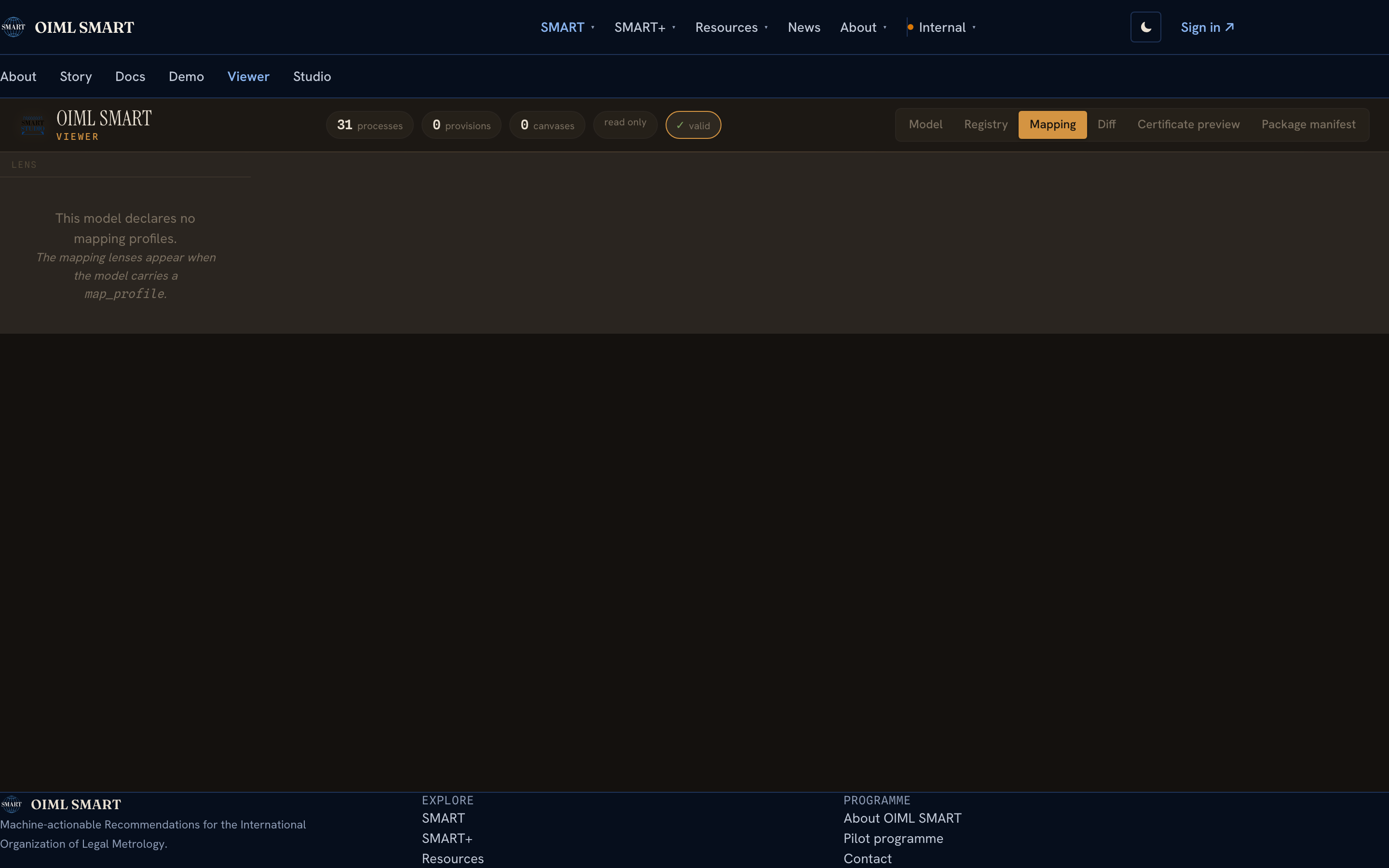
The mapping lens, honest about the current model — captured 2026-08-29 by scripts/capture-services.ts 5. Diff two versions. The diff lens loads a second .prl version and runs the kernel's model-diff: added, removed, changed, and moved per element, facet-level before and after, plus the mapping diff.
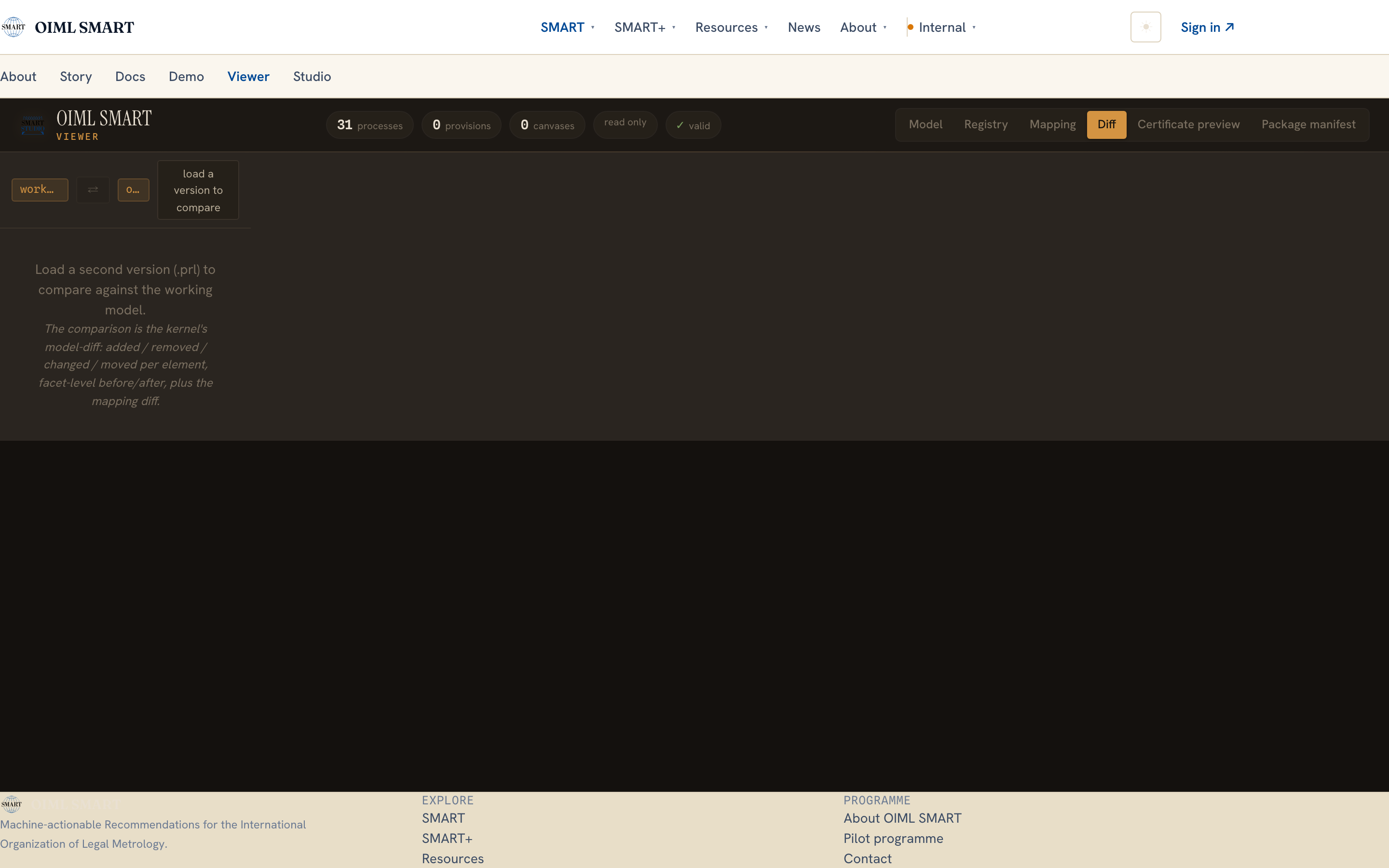
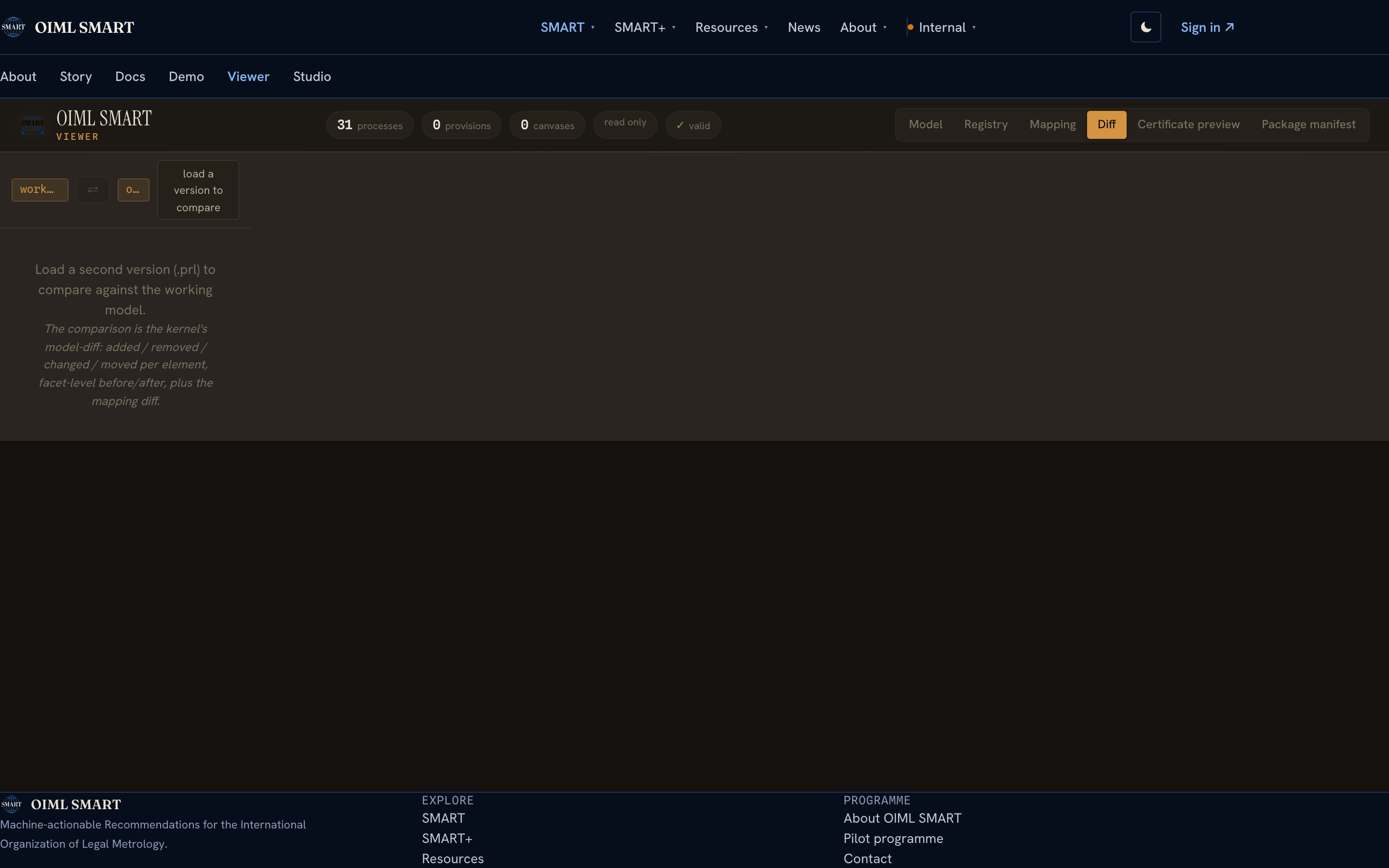
The diff lens: the kernel's model-diff, not a text diff — captured 2026-08-29 by scripts/capture-services.ts 6. Preview the certificate the model implies. The certificate preview renders the instrument certificate from the model itself: the document the workflow will issue is a projection of the same source.
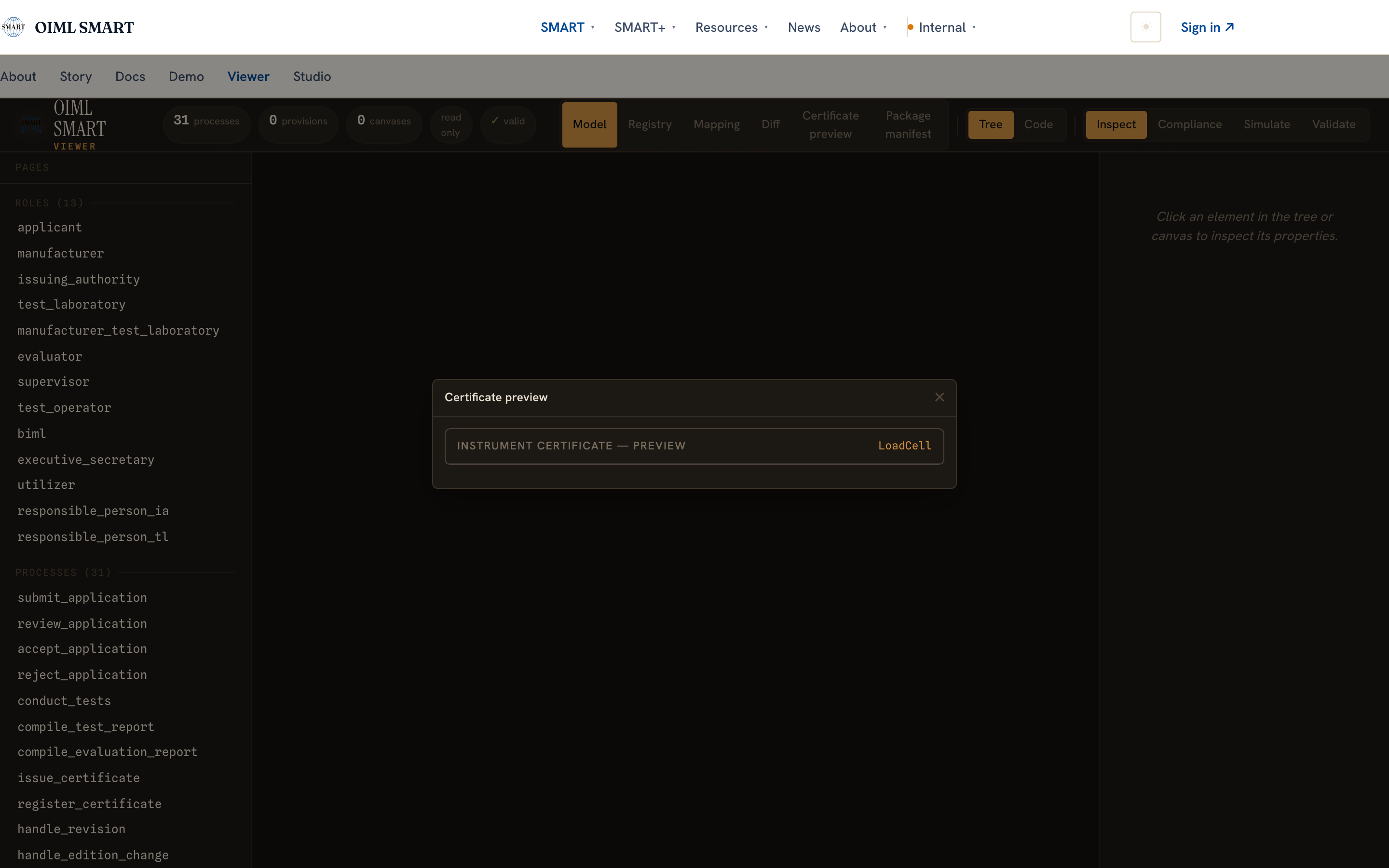
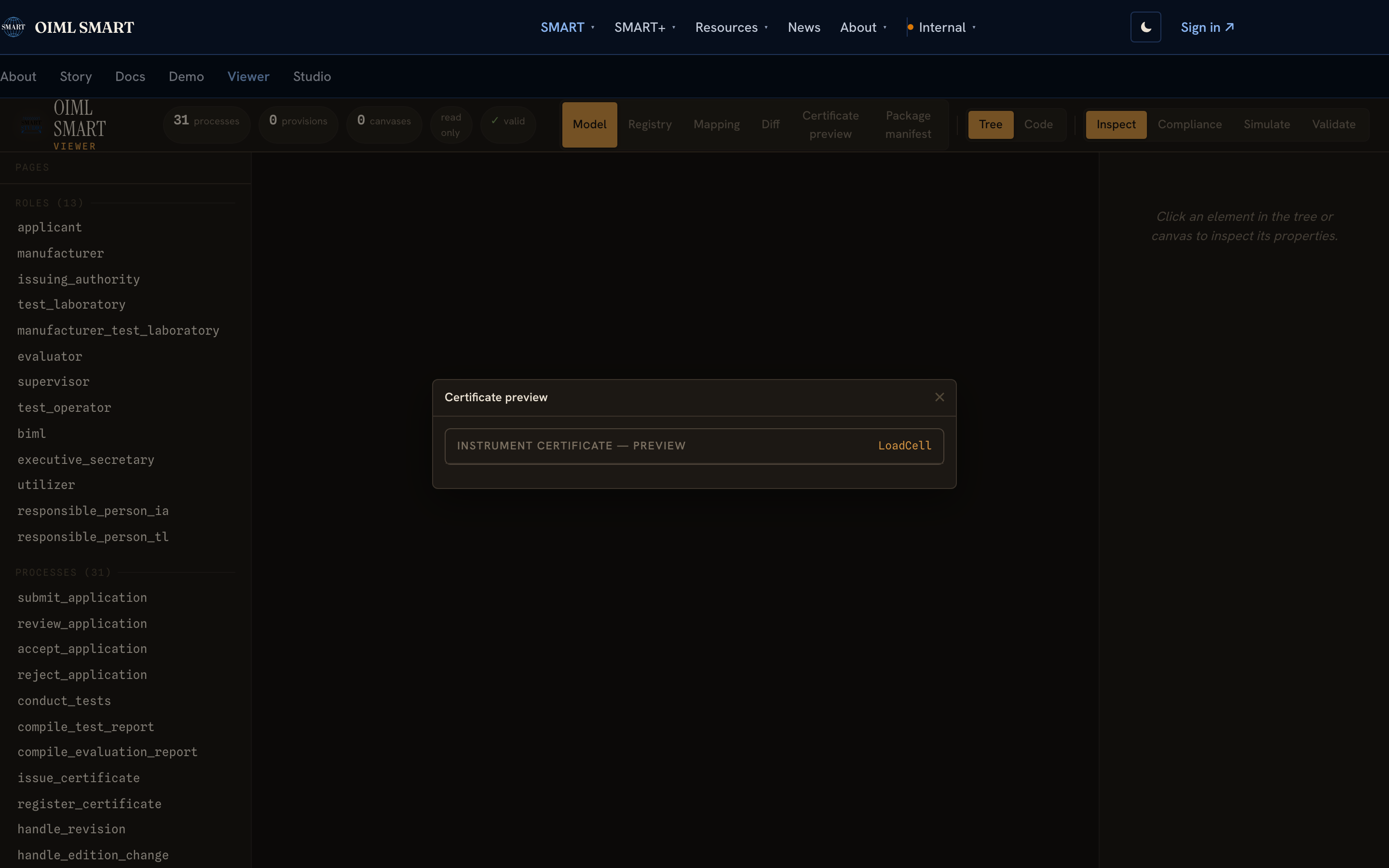
The certificate preview: the document as a projection of the model — captured 2026-08-29 by scripts/capture-services.ts 7. Follow the editor program. Authoring is a separate program, the SMART Studio editor (the package as the unit of work, provenance-carrying saves): the repository is public, primmel/editor (source available, license pending). When it ships, the Studio stops being read-only; until then, this page says viewer and means it.
How it works
The viewer reads the published Primmel packages, the same source of truth the platform executes, and projects them into the lenses. Nothing you see is a copy maintained by hand; a lens is a view over the package, and the validation marker is computed from it.
SMART today, SMART+ next
SMART · LIVE TODAY
The viewer over the published SMART Recommendations: every lens and check in the inventory above, public, no account.
SMART+ · THE ROADMAP TIER
The SMART+ instruments declare their served twin interface in the same package form, so the viewer is where a twin declaration will be read the way a requirement is read today; that content program is roadmap, anchored on the SMART Twin page. The editor (SMART's own authoring surface) is likewise roadmap until the program ships.
Status
| Status-page row | Declared availability | Declared latency |
|---|---|---|
| Studio viewer | 99.9% / 30d | p95 ≤ 2 s |
Probed once a minute with a content assertion per row; the live actuals (30/90-day uptime, p95) are onstatus.oimlsmart.org, a number is never rounded up to meet a target.
Who can use it, who can run it
| Member State | Corresponding Member | Issuing Authority / Test Laboratory (of a Member State) | Utilizer / Associate | Applicant / public |
|---|---|---|---|---|
| ✅ | ✅ | ✅ | ✅ | ✅ public |
The Studio viewer, quoted from the program's single entitlement source; the full matrix, all services by all member categories, lives atWho can run what.
The honest questions
Can I edit a model here?
No, and the viewer says so on its face. Authoring is the editor program (the package as the unit of work, provenance-carrying saves), on the roadmap; the public repository is there for toolmakers who want to follow it.
What does the valid marker actually mean?
The viewer runs validation over the package it renders and shows the result. It is computed from the model, not asserted in copy; a package that fails validation would show that instead.
Do I need an account?
No. The published models are public artifacts, and the viewer is a public surface; there is nothing to request.
Why does the mapping lens say the model declares no mappings?
Because that is the current package's honest state: the lens renders mapping profiles where the model declares them, and the published R 60 package declares none yet. When a profile lands, the lens has somewhere real to point.
Where to go next
The model tree is the front door; the lens bar carries the rest. No account, nothing to install.
The developer quickstart and the Primmel language volumes: what a package is, how the lenses project it.
info@oimlsmart.org, the programme's front-door address. Toolmaker questions and the editor program land here.
Verified 2026-08-29: the viewer answered live and every act above was performed headlessly (the tree, the code view, the mapping lens's honest empty state, the diff lens, the certificate preview, the computed read-only and valid markers). The captures and their assertions are in public/img/services/manifest.json.